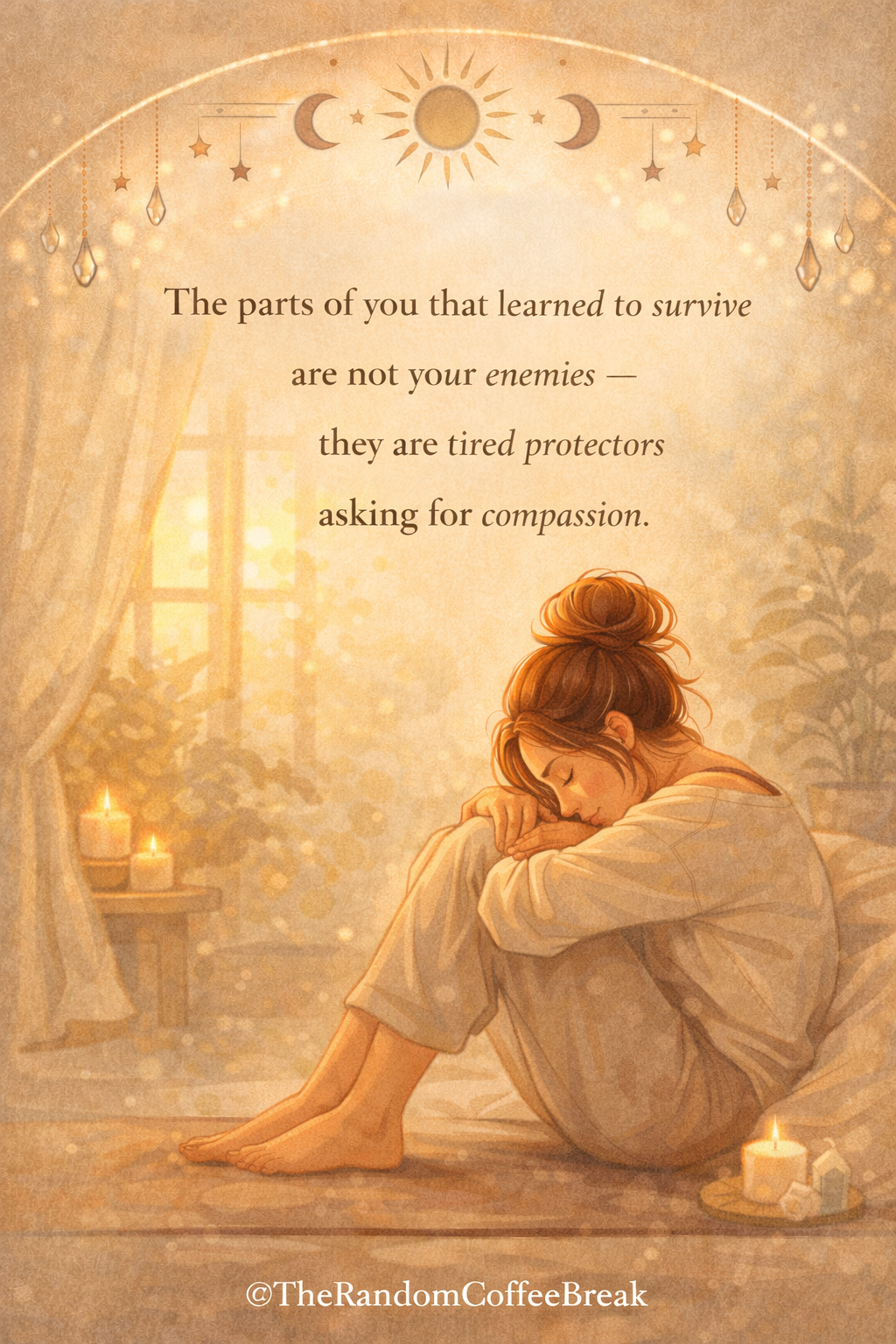
Somatic Healing
When the Body Finally Gets to Speak
There are seasons when your mind understands everything… and your body still feels tight. You’ve journaled. You’ve processed. You’ve talked it through. And yet — your shoulders stay lifted. Your jaw stays clenched. Your nervous system hums like it forgot how to power down. This is where somatic healing begins. Not in the thinking. In the feeling.
What Is Somatic Healing?
Somatic healing is the practice of listening to the body as an active participant in your emotional life. The word somatic comes from the Greek word soma, meaning “body.” It’s rooted in the understanding that trauma, stress, and chronic emotional strain are not just stored in thoughts — they are stored in tissues, posture, breath, and nervous system patterns. Your body remembers what your mind tries to minimize. It remembers the over giving. The hypervigilance. The years you stayed strong when you were actually overwhelmed. Somatic work gently asks: Where is this living in you?
The Body Keeps Score (But It Also Keeps Wisdom)
Have you ever noticed: • Anxiety sitting in your chest? • A knot in your stomach before difficult conversations? • Exhaustion that feels cellular, not just mental? • Shoulders that never quite drop? Your nervous system is not dramatic. It is protective. When you’ve lived in survival mode — even subtly — your body adapts. Muscles tighten. Breath shortens. The sympathetic nervous system (fight or flight) becomes the default setting. And over time, that becomes your “normal.” Somatic healing helps you come home to regulation.
Why Talking Isn’t Always Enough
Cognitive insight is powerful. Understanding your patterns matters. But trauma and chronic stress are often pre-verbal. They live beneath language.
You can know: • “I am safe now.” • “I don’t have to overperform.” • “I don’t have to carry everything.” And still feel braced. Because safety is not a thought. It is a sensation. Somatic healing focuses on helping the body experience safety again — not just understand it intellectually.
Gentle Somatic Practices You Can Begin Today
Nothing dramatic. Nothing overwhelming. Just small invitations.
1. The 60-Second Shoulder Drop Right now, notice your shoulders. Let them fall. Exhale slowly through your mouth. Do it again. This tells your nervous system: You are not in danger.
2. Hand on Heart, Hand on Stomach Place one hand on your chest and one on your abdomen. Breathe in slowly for four counts. Exhale for six. Longer exhales activate the parasympathetic nervous system — your body’s “rest and digest” state. Whisper (literally or internally): “I am here. I am safe in this moment.”
3. Orienting to the Room Look around slowly. Name five neutral or pleasant things you see: • The light on the wall. • The steam from your mug. • The texture of your journal. • The plant in the corner. • The quiet. This anchors you in the present. Trauma pulls us backward. Anxiety pulls us forward. Somatic awareness brings us here.
4. Micro-Movements Gently roll your neck. Unclench your jaw. Stretch your fingers wide. Press your feet into the floor. Small movements releases tension that talk therapy alone cannot access.
Somatic Healing for the Over-givers
Somatic healing is especially powerful for those who: • Learned to be strong early. • Feel responsible for other people’s emotional stability. • Live in quiet hypervigilance. • Feel emotionally stagnant but physically exhausted. • Fear that everything they’ve built could collapse. The body of an over-giver is often braced. Healing is not about doing more. It’s about softening.
What Somatic Healing Is Not It is not bypassing therapy. It is not ignoring thoughts. It is not dramatic emotional release on command. It is slow. It is subtle. It is learning the difference between tension and safety. Between bracing and resting. Between surviving and settling.
The Random Coffee Break Way: Slow, Safe, Gentle At The Random Coffee Break, we don’t force transformation. We sip it. Somatic healing fits beautifully into this slow-living ethos. It is journaling after you breathe. It is writing once your shoulders drop. It is letting your body exhale before you analyze. You do not have to rush into who you are becoming. Your nervous system has been carrying you for years. Let it learn something new: You are allowed to rest.
A Journal Prompt for Tonight Before you close your day, write: • Where do I hold tension most often? • What does my body feel like when I am safe? • When was the last time my shoulders truly dropped? • What would “soft” feel like in my body? Let your answers be sensory, not intellectual. Warm. Heavy. Loose. Grounded. Open.
Somatic healing is not about fixing yourself. It is about befriending the body that protected you. And teaching it — gently — that the storm has passed. Sit with your breath tonight. Feel your feet on the floor. Let your body know it no longer has to guard every door. Take what you need. Until the next quiet cup.
Disclaimer: The content provided by The Random Coffee Break is for informational and educational purposes only and is not medical or mental health advice. It is not a substitute for professional care. Please consult a qualified healthcare or mental health provider regarding your specific situation.