You miss a day. Then another. Your journal stays closed. The yoga mat gathers dust. The evening walk becomes one more thing you meant to do but could not quite reach. And somewhere in the background, a familiar voice begins to speak. You are falling behind. You have lost your rhythm. You might as well stop trying. But what if you have not failed? What if your self-care practice was never meant to look exactly the same every day?
The pressure to do care perfectly
Many of us were taught to approach self-care like a routine checklist. Meditate for ten minutes. Drink eight glasses of water. Move your body. Write three pages. Go to bed early. Repeat tomorrow. There can be comfort in structure. A familiar rhythm can help us return to ourselves when the world feels noisy. But structure becomes something else when missing one part makes the entire practice feel pointless. This is where the all-or-nothing mindset quietly enters. You miss your morning walk, so you decide the whole day is lost. You do not have time for a full journaling session, so you write nothing. You cannot complete the routine exactly as planned, so you abandon it until Monday, or the beginning of next month, or some imagined future when life feels easier. You are not lazy for responding this way. You are not broken. You may simply be carrying a definition of consistency that leaves no room for being human.
Self-care is not a performance
Self-care is often presented as something polished. A clear morning. A clean room. A beautiful notebook. A long bath with nowhere else to be. Those moments can be nourishing, but care also happens in much less visible ways. It can be the glass of water you drink while standing at the kitchen counter. The boundary you set in a text message. The meal you make when you would rather skip it. The moment you notice that your shoulders are tense and let them lower. The World Health Organization describes self-care as an ongoing way individuals, families, and communities support their health and well-being. It is not a fixed performance. It is not a score. It is not something you can permanently lose because your needs changed. Self-care is responsive. It listens to your circumstances, your energy, your body, and the season you are moving through. Some days, care may look like movement. Other days, it may look like stillness. Sometimes you need reflection. Sometimes you need to stop reflecting and simply eat something warm.
Inconsistency can be a form of wisdom
A rigid routine assumes that you will have the same energy, time, responsibilities, and emotional capacity every day. But you are not a machine moving along a conveyor belt. You are affected by sleep, stress, weather, work, relationships, illness, caregiving, grief, creativity, and change. Your needs are allowed to shift. A practice that supports you on a quiet Sunday may feel impossible on a crowded Wednesday. That does not mean the practice is useless. It may mean it needs more than one shape. Consider the natural world. A tree does not bloom every morning. The tide does not rise to the same place each day. A field has seasons of growth, harvest, rest, and becoming. There is movement in all of it. There is also pause. At The Random Coffee Break, our softer rhythms philosophy begins here: sustainable care should be able to bend without breaking. You do not have to force yourself into the same shape every day to be devoted to your well-being.
Try asking, “What do I need today?”
A checklist asks: What am I supposed to complete? A gentler practice asks: What do I need today? The question creates a small opening between expectation and attention. It invites you to listen before you decide. You might notice: I need quiet because my mind feels crowded. I need movement because I have been sitting all day. I need connection because I have been carrying too much alone. I need food because I have been postponing my body’s signals. I need sleep because everything feels harder than it should. I need something beautiful because the day has felt flat. I need to do less because I have been asking too much of myself. There is no perfect answer. There is only the honest answer you can hear today.
A three-part framework for flexible self-care
When you feel unsure where to begin, you might move through these three quiet questions.
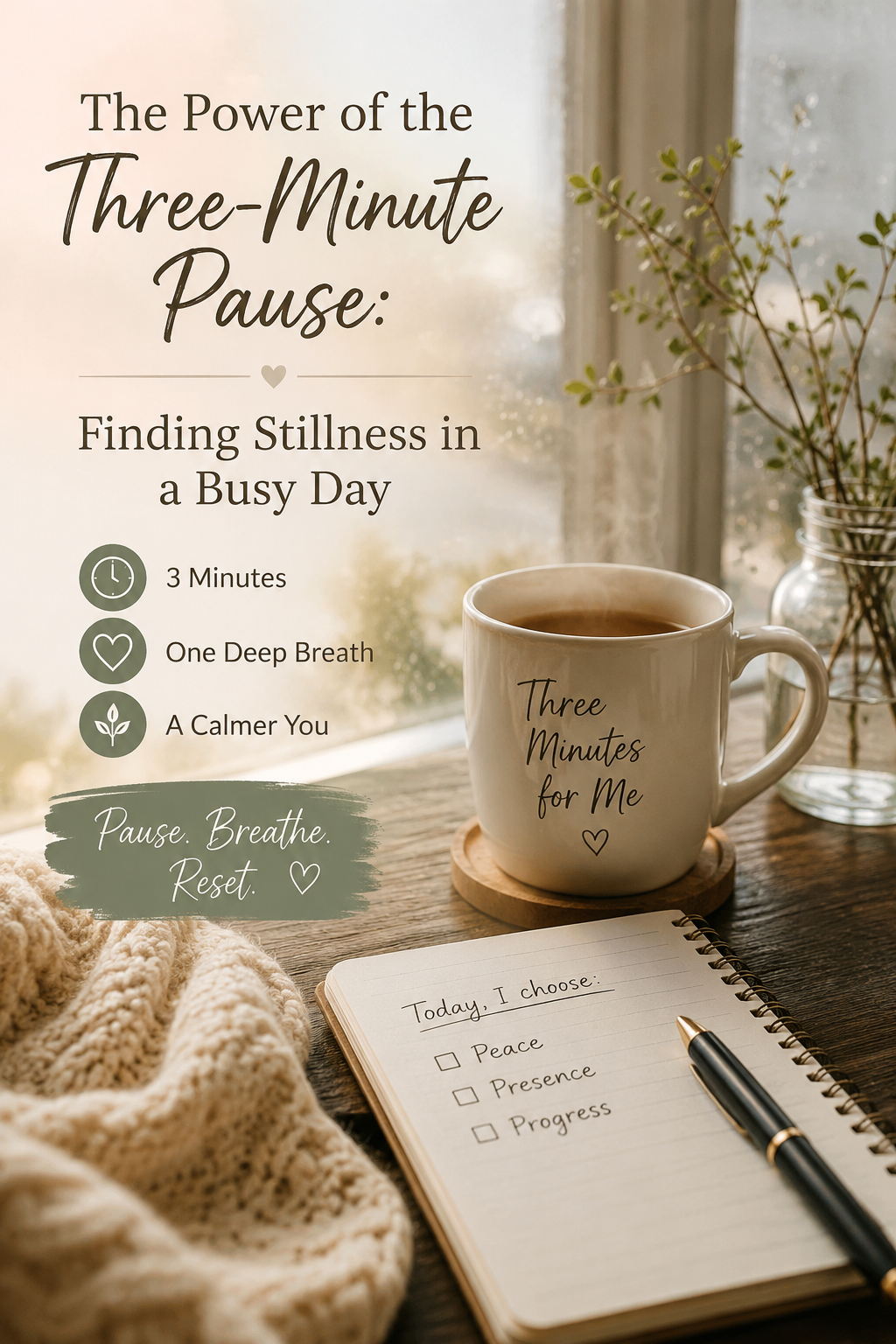
1. Listen Before reaching for your routine, pause. Notice the condition of your inner weather. Are you foggy, restless, tender, overstimulated, or tired? What is happening in your body? You do not need to solve the feeling immediately. You are simply making contact with yourself. This is the first pillar of our work at TRCB: Stillness. Stillness does not require an empty schedule or a perfectly quiet room. It can be two minutes with your hands around a warm cup. It can be one slow breath before opening your inbox. It can be sitting on the edge of your bed and noticing that you are here. Even two minutes of intentional pause counts as showing up for yourself.
2. Choose Once you have listened, choose the smallest form of care that feels possible. Not the most impressive form. Not the version you would post about. The version that meets you where you are. On a full day, that might be: Taking three slow breaths beside an open window. Stretching your neck and shoulders for two minutes. Drinking water before your next task. Stepping outside and looking at the sky. Putting your phone in another room while you eat. Writing one honest sentence in a journal. Turning off one notification. Going to bed without finishing every obligation. Small does not mean meaningless. A small act can be a doorway.
3. Return The goal is not to maintain a perfect streak. The goal is to keep learning how to return. Return after the missed morning. Return after the difficult week. Return after the season when your old practice no longer fit. There is no dramatic restart required. You do not need to punish yourself with an intense routine to make up for the days you missed. You can simply begin again with the next breath, the next glass of water, the next quiet cup of coffee. Our second pillar, Reflection, helps you notice what your changing practice is teaching you. What made the routine difficult to continue? Was it too long? Too early? Too expensive? Too disconnected from what you actually needed? Your answers are not evidence against you. They are information. They help your practice unfold into something more truthful.
Let your practice have different sizes
It can help to create several versions of the same caring practice. A full version. A small version. A smallest-possible version. For example, your journaling practice might look like this: Full: Twenty minutes with your journal and a cup of tea. Small: Five minutes writing about what is present. Smallest possible: One sentence: “Today, I notice…”
Your movement practice might become: Full: A thirty-minute walk. Small: Ten minutes of stretching. Smallest possible: Standing up, rolling your shoulders, and taking three steady breaths.
Your stillness practice might be: Full: A screen-free morning ritual. Small: Five quiet minutes with your coffee. Smallest possible: Two intentional minutes before the day carries you away. Every version counts. The smallest version is not a consolation prize. It is a way of keeping the door open.
You are allowed to change your mind
Sometimes a practice stops nourishing you. The morning routine that once felt grounding begins to feel like another demand. The daily walk becomes difficult because your body needs rest. The meditation app makes you feel more focused on completing the session than meeting yourself. You are allowed to adjust. You are allowed to say, “Not today.” You are allowed to choose a different form of care without proving that the old one was worthwhile. This is the third TRCB pillar: Rebuilding. Rebuilding does not mean returning to who you were before things became difficult. It means creating something more supportive from what you have learned. Maybe your new practice is less polished but more honest. Maybe it happens in the afternoon instead of the morning. Maybe it includes more rest. Maybe it has no set time at all. A flexible practice can still be meaningful. In fact, it may be more likely to stay with you because it belongs to your actual life.
A quiet permission slip
You might write these words somewhere you can find them: I give myself permission to be inconsistent. I give myself permission to adjust my care when my needs change. I give myself permission to do something small instead of nothing. I give myself permission to rest without earning it. I give myself permission to return without shame. I give myself permission to be a person, not a project. Read them slowly. Notice which sentence creates the most resistance. What would it mean to offer yourself that permission today?
An invitation for the next few days
For the next week, try setting aside the question, “Did I follow my routine?” Instead, ask: What do I need today, and what is one gentle way I can respond? Some days, the answer may be a nourishing meal. Some days, it may be a walk. Some days, it may be closing your laptop and resting your eyes. Some days, it may be two minutes of intentional pause while the kettle hums and morning light moves across the floor. Let the answer change. Let the practice breathe. If you would like a simple place to begin, try our Quiet Cup approach: a few minutes with your drink, your senses, and no demand to optimize the moment. You cannot fail at returning to yourself. You can only keep discovering what return looks like today. The world can wait for five minutes. And you are worthy of those five minutes, even when yesterday looked different.
With warmth and quiet permission, The Random Coffee Break Team
The reflections shared here are for personal reflection and informational purposes. They are not a substitute for medical or mental health care. If you are experiencing significant distress, please seek support from a qualified professional.