The Random Coffee Break
slow moments • gentle clarity • quiet courage

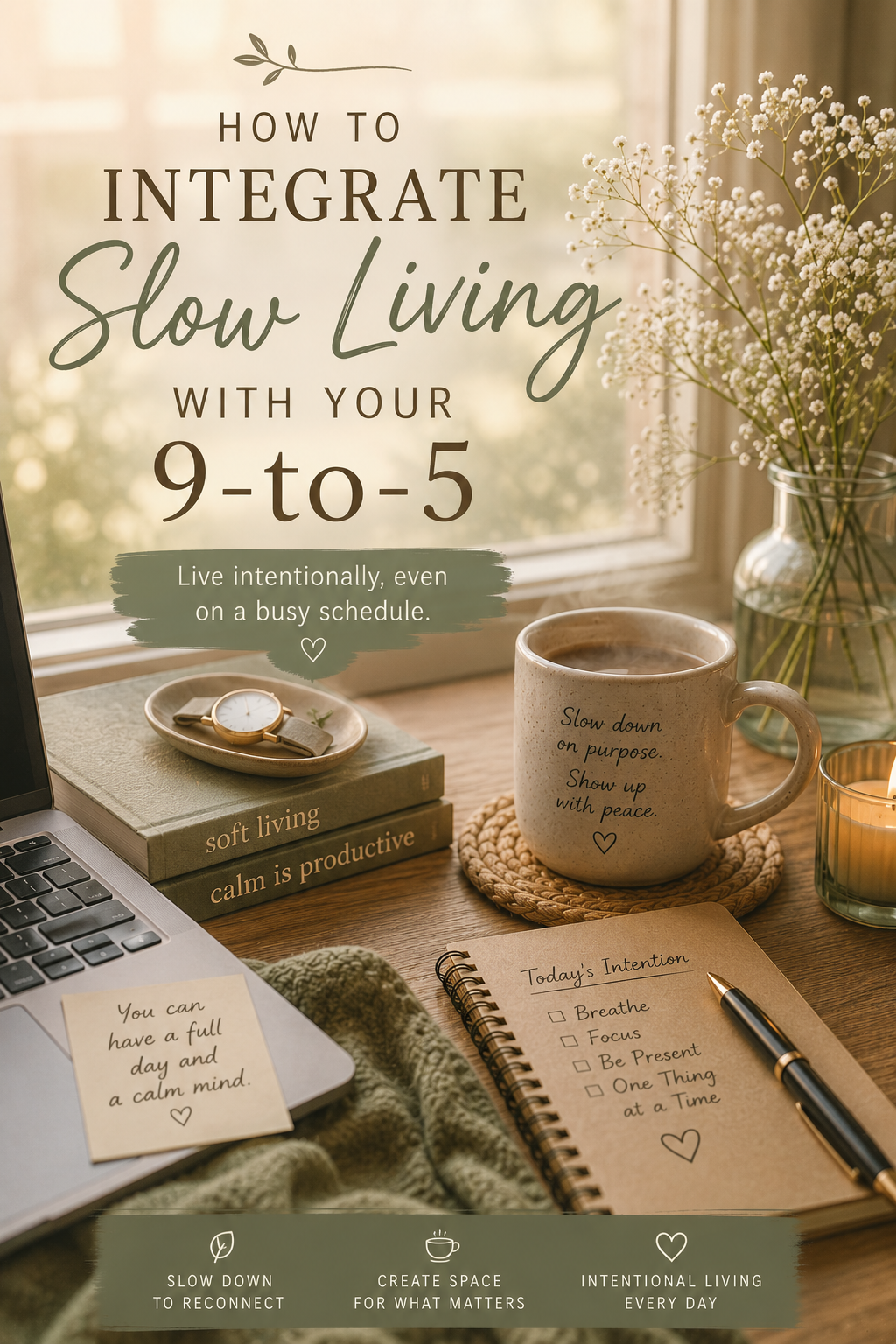
Welcome to another Cupside Conversation. Pull up a chair. Maybe take a small sip of whatever is in your mug right now. Is it warm? Let that warmth ground you for a second. Today, we are talking about the space between the clock-in and the clock-out. The 9-to-5. For many of us, it feels like a place where "slow" goes to die. A place where the "hustle" is the only language spoken. But what if it didn’t have to be? What if you could carry your stillness into the office, the cubicle, or the home-office desk? Slow living is not a vacation. It is a way of being that you can invite into the busiest parts of your day. The Myth of Optimization We are often told to optimize. Optimize our morning routine. Optimize our workflow. Optimize our sleep so we can produce more tomorrow. It feels heavy, doesn't it? Like you are a machine that needs constant fine-tuning. At The Random Coffee Break, we invite you to choose recovery over optimization. Recovery is not just something you do when you are broken. It is a rhythm. It is the exhale after a long inhale. When you prioritize peace over pressure, you aren't doing "less." You are doing enough. And you are doing it with a soul that is still intact.

Small Moments of Stillness

You do not need an hour of meditation to find stillness at work. You only need a few seconds. Notice the weight of your feet on the floor while you wait for a file to download. Notice the texture of the keyboard under your fingers. Listen to the hum of the air conditioner. These are sensory anchors. They pull you out of the "fog" of a long to-do list and back into your body. Try a "micro-break." Not to check your phone, that is just more noise. But to look out the window. To watch the way the light hits the wall. To breathe. Three deep breaths can be a revolution in a crowded workday. Setting Gentle Boundaries Boundaries often feel like walls. Harsh and cold. But think of them instead as a garden fence. They protect the soft things growing inside. Slow living in a 9-to-5 requires a few gentle fences. Perhaps it is not checking your email before your first cup of coffee is finished. Perhaps it is leaving your desk for lunch. A real lunch. One where you taste your food. One where you are not "on." It is okay to say, "I am focusing on this right now; I will get back to you in an hour." It is okay to be unavailable for a moment. The world will wait for five minutes. We promise.

Shifting to a Soft Rhythm

Think of your workday as a piece of music. Hustle culture wants it to be a frantic drum beat. Loud. Constant. Exhausting. We invite you to find a softer rhythm. This means acknowledging that your energy ebbs and flows. Some hours are for deep focus. Some hours are for administrative tasks that require less of your heart. And some hours are for rest. When you stop fighting your natural energy levels, the friction begins to melt away. You are not "lazy" for needing a slower pace in the afternoon. You are human. And humans were never meant to be "on" for eight hours straight. Creating a Peaceful Environment Your physical space matters. It tells a story to your nervous system. If your desk is a mountain of old post-it notes and empty cups, your brain feels that clutter. Clear a small corner. Just one. Put a stone there, or a small plant, or a photo that makes you feel safe. Let your eyes rest on that spot when the "noise" of work gets too loud. Soft lighting can also change everything. If you can, turn off the harsh overhead lights. Use a small lamp. Let the shadows be soft. It is much harder to feel frantic when the room feels like a hug.

The End-of-Day Ritual

How do you leave work? Do you slam the laptop and immediately start worrying about dinner? Or do you close the day with intention? Try a "closing ceremony." Write down three things you accomplished, even if they were small. I sent that difficult email. I drank enough water. I took a deep breath during the meeting. Then, physically close your workspace. Put your pen away. Close the tabs. This signals to your brain that the "hustle" is over. You are entering the time for recovery. Consider This: A Quiet Practice If you find yourself feeling lost in the 9-to-5 fog, take a piece of paper. Don't worry about "doing it right." Just let the words unfold. What does "enough" look like for me today? Where did I feel a "pinch" of stress, and what was my body trying to tell me? What is one thing I can say "no" to tomorrow to create a pocket of peace? How does the light look in my workspace at 3:00 PM? If my workday had a scent, what would I want it to be? A Final Thought Integrating slow living into your work isn't about changing your job. It’s about changing how you inhabit it. It is a series of tiny, brave decisions to choose yourself over the output. You are more than your productivity. You are a person who deserves a quiet heart, even on a Tuesday afternoon.

Take what you need. Until the next quiet cup. -The Random Coffee Break

The world moves at a pace that often feels impossible to match. You might feel as though you are constantly playing catch-up with your own life. The emails. The notifications. The quiet, persistent hum of things left undone. It is easy to believe that in order to find peace, you must first clear your schedule. That you must travel somewhere far away. Or sit in silence for an hour you do not have. But stillness does not require a mountain top. It only requires a moment. Here, we explore the idea that mindfulness is not a mountain to climb, but a small pocket of peace you can carry in your coat. A way to find your center in just three minutes. Because the world can wait for three minutes.

The weight of the "always on" world We often talk about work-life balance as if it were a scale we must perfectly level. But sometimes, the scale is broken. We feel the pressure to be productive every second. Even our rest feels like something we must optimize. This is why many of us struggle with meditation for beginners. We approach it like another task. Another thing to be "good" at. But what if meditation was simply an invitation to stop? Not to be better. Not to be "zen." Just to be here. When you feel like you’re losing yourself in the noise, these three minutes are your anchor.

Minute One: Arriving (Stillness)

The first minute is about the body. It is the act of physical arrival. You might be sitting at your desk. Or standing in line for a morning coffee. Perhaps you are sitting on the edge of your bed, feet touching the cool floor. Notice the weight of your body. How the chair holds you. How the ground supports you. You do not need to do anything to be held. Soften your shoulders. Let them drop away from your ears. Unclench your jaw. Notice if you are holding your breath. You are not "doing" meditation yet. You are simply noticing that you have a body. And that your body is right here. This is the first pillar of our practice: Stillness. It is the radical act of refusing to rush for sixty seconds.

Minute Two: Noticing (Reflection) Once the body has arrived, the mind may still be running. That is okay. Your mind is doing what it was built to do. It is trying to protect you by planning, remembering, and worrying. In this second minute, we practice Reflection. Instead of trying to stop the thoughts, simply notice them. Imagine your thoughts are like clouds passing over a field. Or steam rising from a warm mug of tea. You are the field. You are the mug. The thoughts are just passing through. Listen to the sounds around you. The distant hum of traffic. The ticking of a clock. The sound of your own breathing. Notice how the air feels as it enters your nose. Is it cool? Is it warm? You are not judging these sensations. You are simply being a witness to them. This is where slow living begins. It is the realization that the present moment is full, even when it is quiet.

Minute Three: Returning (Rebuilding) The final minute is perhaps the most important. It is the bridge between your quiet moment and the rest of your day. In our community, we call this Rebuilding. We are not just seeking a temporary escape. We are building a more intentional life, one breath at a time. As you finish these three minutes, do not rush to check your phone. Stay in the space you have created for just a few more seconds. How do you want to carry this feeling into your next hour? Perhaps you choose to move a little slower. Perhaps you choose to speak a little more gently. You are rebuilding your next chapter with every conscious choice to stay centered. Wiggle your fingers. Roll your ankles. When you are ready, gently open your eyes. You have been away for three minutes. And yet, everything feels slightly different.

Why three minutes is enough We often hear that we need twenty minutes of meditation to see results. But in an overstimulated world, twenty minutes can feel like a lifetime. Three minutes is accessible. Three minutes is honest. It is long enough to break the cycle of stress. But short enough to fit into a lunch break or a morning ritual. When we lower the barrier to entry, we make peace a habit rather than a luxury.

The beauty of the "Small Pause"

Mindfulness does not have to be a formal event. It can happen while you are washing the dishes. Feeling the warmth of the water on your hands. It can happen while you are walking to your car. Noticing the way the light hits the pavement. These small pauses are the foundation of a mindful life. They remind us that we are human beings, not human doings. They give us permission to breathe. If you find that your shadow self is asking to be heard, these moments of stillness are where you can begin to listen. Without judgment. Without fear. Just with a gentle curiosity.

Creating your environment

While you can meditate anywhere, it can be helpful to create a "warm analog" space for yourself. A place that feels soft. Think about the textures around you. A linen pillow. A wooden table. The way the light filters through a thin curtain. These natural elements ground us. They remind us of the slow, steady rhythms of the earth. When your environment is calm, your internal world often follows. But even if your environment is chaotic, remember: Your center is within you. You can find it in the middle of a crowded train. Or a noisy office. It is always there, waiting for you to notice it.

An invitation to continue

Meditation is a practice, not a destination. Some days, those three minutes will feel like a warm hug. Other days, they will feel like a struggle. Both are okay. The goal is not to be a "perfect" meditator. The goal is to show up for yourself. To say, "I am worth three minutes of my own time." Because you are. You deserve a life that feels like yours. A life where you have the space to breathe and the time to notice the light. If you are looking for a way to deepen this practice, I invite you to join our quiet community. We have a gentle guide called 7 Days of Quiet Reflection. It is a free resource designed to help you build these small pockets of peace into your daily rhythm. No pressure. No hustle. Just a gentle unfolding. You can find it here. Take your time. The world can wait. May your day be soft, and your heart be light. With warmth,

The Random Coffee Break

You have been running for a long time. Perhaps you didn’t notice the pace at first. It started as a light jog. A series of deadlines. A few extra notifications. The hum of the office. The chime of the email. And then, slowly, the world became very loud. You are not broken. You are simply full. You are full of voices that are not your own. Full of expectations that don't fit the shape of your soul. Full of a "hustle" that has left you hollow. Maybe you are sitting at your desk right now. Your eyes are heavy. The screen is a blur of blue light and demands. You feel a tug. A quiet pull toward the door. Toward the window. Toward a life that feels like yours again. This is the beginning of your quiet exit.

The Fog of the Constant Connection

Burnout is not a wall. It is a fog. It settles in the corners of your room. It sits in the bottom of your coffee cup. It makes the simplest tasks feel like walking through deep water. You might feel like you are losing your grip on the things you once loved. You might feel like you are losing yourself. We want you to know: It is okay to be tired. It is okay to want out.

The "Quiet Exit" is not about a dramatic resignation. It is not about burning bridges. It is about a soft withdrawal from the noise. It is an invitation to stop giving your energy to things that do not give it back. Notice how your body feels when you think about "doing less." Does your chest tighten? Or does it finally, for a moment, soften? Listen to that softness. An Invitation to Stillness

At The Random Coffee Break, we believe in the power of the pause. We believe that a warm mug held in two hands is a sacred thing. The steam rising. The warmth seeping into your palms. The world slowing down to the speed of a sip. This is where the rebuilding begins. Not in the grand plans for a new career. Not in the five-year strategy. But in the stillness of this morning. Stillness is not laziness. Stillness is the soil where clarity grows. When you sit still, the silt in the water of your mind begins to settle. The clouds begin to part. And eventually, life starts to come back into focus. You do not need to have the answers today. You only need to have the breath. Inhale. Notice the cool air. Exhale. Notice the release. The world can wait for five minutes. Truly. It can. The emails will stay in the inbox. The projects will remain on the list. The expectations of others will linger. But for these five minutes, you belong to yourself. Introducing: The Calming Journal

We made something gentle for you. For the dreamers who are tired. For the achievers who are empty. For the creatives who have lost their spark. The Calming Journal is now live. It is available now in our website (www.TheRandomCoffeeBreak.com) and on Gumroad. This is not a "productivity" workbook. It will not tell you how to "optimize" your exit. It will not give you a checklist for a six-figure pivot. Instead, it is a collection of quiet practices. A series of reflective prompts. A map for returning to your own center. It is built upon our three pillars: Stillness: Learning to sit with the silence until it feels like a friend. Reflection: Identifying the "noise" that has been masquerading as your own voice. Rebuilding: Creating intentional habits that honor your energy, not just your output. This workbook is designed for the moments between. The moments when you are transitioning from the corporate world. The moments when you are closing one chapter and haven't yet opened the next. It is a soft place to land. Softness with Structure

We know that "slowing down" can feel terrifying. When you have been defined by your "doing," "being" feels like a risk. You might fear that if you stop, you will never start again. You might fear that you will be forgotten. The Quiet Exit is about building a structure of softness. It is about morning rituals that ground you. It is about evening reflections that clear the day. It is about listening to the parts of yourself that have been whispered away. In the workbook, you will find: Quiet prompts for morning light. Gentle movement invitations for tired bodies. Space to mourn what you are leaving behind. Guided stillness for when the anxiety rises. We want to help you rebuild. But we want you to rebuild slowly. Brick by brick. Breath by breath. There is no rush to the finish line. The finish line is an illusion anyway.

Your First Quiet Practice

You do not have to wait to begin. You can begin right now. Set down your phone. Close your eyes. Or soften your gaze on something neutral. Notice the weight of your body in the chair. The way the floor supports your feet.

Ask yourself: What is one thing I am carrying that is not mine? Maybe it is a boss's frustration. Maybe it is a parent's expectation. Maybe it is a society's definition of success. Imagine yourself setting it down. Just for a moment. Like a heavy bag at the end of a long walk. You don't have to throw it away yet. Just notice how it feels to let your shoulders drop. This is the work. This is the rebuilding.

A Note on the Journey Ahead We are so glad you are here. The world needs more people who have dared to slow down. More people who have chosen softness over the grind. More people who have taken a quiet exit. You are part of a community that understands. A community that knows that taking a break isn't lazy. It is revolutionary self-care.

If you have been waiting for a softer way to begin again, this is your invitation. You can meet this next chapter with a little hope. A little steadiness. A little more room to breathe. Your next chapter is unfolding. And it is allowed to be gentle. The world can wait for five minutes. But your soul has waited long enough.

Softly, The Random Coffee Break Team

The world moves very fast. Sometimes, it feels like it moves faster than we were ever meant to go. You wake up, and the noise is already there. The hum of the phone. The weight of the to-do list. The feeling that you are already behind, even before your feet have touched the floor. We live in a culture that treats "busy" like a badge of honor. We are told that to be still is to be lazy. We are told that every second must be optimized, squeezed, and used. But what if we tried something different? What if we gave ourselves the permission to simply... stop? Not forever. Just for a moment. A slow, deliberate moment.

What is a Slow Moment?

A slow moment is not a task to be completed. It is not something you "do" so you can be more productive later. It is a pause that exists for its own sake. It is the act of noticing the steam rising from your coffee. It is the way the light stretches across the wooden floor in the afternoon. It is the feeling of your own breath, steady and quiet, in a room that is finally still. When we allow for these moments, we are not losing time. We are reclaiming ourselves. We are telling our nervous systems that, for right now, the world can wait. And the world always waits. It will be there when you return. But you will return to it differently. You will return with a heart that has had a chance to soften.

Embracing the "Nonna-Maxxing" Way

Lately, we have been talking about a philosophy we like to call "Nonna-Maxxing." It is a gentle way of looking at the world. It is about finding the joy in the analog rhythms of life. Think of a grandmother in a quiet kitchen. She is not rushing. She is not checking her notifications while the water boils. She is present with the dough. She is present with the sunlight on the countertop. Nonna-Maxxing is an invitation to bring that same intentionality into your own day. It is about trading the digital scroll for the weight of a book. It is about choosing the "softer rhythms" over the hustle. It is about understanding that some things: the best things: take time to unfold. When you practice a slow moment, you are practicing a form of revolutionary self-care. You are saying that your peace is more important than the algorithm. You are saying that you deserve to exist without being "useful."

Creating Your Sanctuary with Sound

One of the hardest parts of slowing down is the silence. For many of us, silence feels loud. It feels like a space that needs to be filled with noise, podcasts, or scrolling. But there is a middle ground between the chaos of the world and the heavy silence of an empty room. There is the sound of the earth. At The Random Coffee Break, we believe that our environment dictates our internal state. If your environment is cluttered with noise, your mind will feel cluttered, too. This is why we created The Random Coffee Break TV on YouTube. It is a place where you can find soothing nature sounds designed to anchor you in the present. The sound of rain against a window. The gentle rustle of leaves in a forest. The soft crackle of a fireplace in a dim room. These are not just background noises. They are invitations to come back to yourself. They provide a "container" for your slow moment. When you play these sounds, you are signaling to your brain that it is safe to let go. You are creating a sanctuary, right where you are. Whether you are journaling, drinking tea, or simply sitting in stillness, let the sounds of nature guide you back to a pace that feels natural.

How to Invite a Slow Moment Into Your Day

You do not need a mountain retreat to find peace. You do not need an hour of meditation. You only need five minutes and a willing heart. Here are a few quiet practices you might consider: The Morning Light Ritual: Before you reach for your phone, sit by a window for five minutes. Just watch the sky. Notice the colors. Let the light be your first input of the day.

The Sensory Sip: When you have your coffee or tea, do nothing else. Feel the warmth of the mug in your palms. Smell the steam. Notice the first sip.

The Analog Evening: Turn off your screens an hour before bed. Light a candle. Listen to the nature sounds on our YouTube channel. Let your eyes rest.

The Intentional Task: Pick one chore: like washing the dishes or folding laundry: and do it slowly. Focus on the temperature of the water or the texture of the fabric.

Notice how your body reacts when you slow down. You might feel a sense of resistance at first. That is okay. You are unlearning years of rushing. Be gentle with yourself as you learn to be still.

A Moment of Reflection

Take a breath. Right now, as you read this. Feel the air fill your lungs. Feel the weight of your body against your chair. Ask yourself these questions, softly and without judgment: What is my body trying to tell me right now? Where am I holding tension that I can let go of? What would it feel like to be five percent slower today? What is one thing I am grateful for that doesn't cost anything? There are no wrong answers. There is only the act of listening.

The Quiet Exit

We are all moving toward something. But sometimes, the most important journey is the one that leads us back to our own center. As we prepare for the launch of our new workbook, "The Quiet Exit," on May 3rd, we want to encourage you to start making your own small exits every day. Exit the noise. Exit the rush. Exit the expectation that you must be everything to everyone at all times. You are allowed to be quiet. You are allowed to be slow. You are allowed to just be. The world can wait for five minutes. And in those five minutes, you might just find everything you've been looking for.

Stay gentle with yourself. We are all in this together.

With warmth and stillness, Bridget The Random Coffee Break

If you’re feeling overwhelmed, you might find comfort in our recent post on what to do when you feel like you’re losing yourself. You aren’t alone.

The world is very loud right now. Perhaps you feel it too. It is a hum that never quite stops. It lives in the pocket of your jeans, buzzing with the thoughts of a thousand strangers. It vibrates in the glow of your laptop at midnight. It whispers that you are behind, that you are missing something, that you must run faster just to stay in the same place. We call this the noise. It is not just sound. It is the weight of constant connectivity. It is the pressure to be productive at the expense of being present. If you are feeling burnt out, you are not failing. You are simply a human being living in a world designed for machines. You are allowed to want something different. You are allowed to step away from the hum. This is your invitation to slow living. It is not a trend or a quick fix. It is a gentle returning to yourself.

The Fog of the Fast Life We often live our lives in a sort of digital fog. We scroll through feeds before our eyes have fully adjusted to the morning light. We eat our lunch while typing emails, never truly tasting the bread or the fruit. We walk through the park with headphones on, blocking out the sound of the wind in the leaves. When we live this way, our focus becomes fragmented. It is like a mirror that has been dropped. We see ourselves in a hundred tiny, sharp pieces. We lose the ability to sit with a single thought. We lose the ability to listen to the quiet messages our bodies are sending us. Do you remember the last time you sat for ten minutes without a screen? Did it feel uncomfortable? That discomfort is not a sign that you are doing something wrong. It is the sound of your nervous system trying to find its way back to a softer rhythm. It is the first step toward reclaiming the parts of yourself that have been hidden by the noise.

Pillar One: Reflection

Before we can change the pace of our lives, we must notice the pace we are currently keeping. This is the practice of reflection. It is not about judging your habits. It is about looking at them with a kind of soft curiosity. Imagine you are watching clouds move across a grey sky. You are simply noticing. Notice the first thing you reach for when you wake up. Notice the way your shoulders tighten when you hear a notification chime. Notice the "shoulds" that play on a loop in your mind. Notice the moments when you feel most like yourself. Reflection is the act of creating space between the noise and your reaction to it. It is asking yourself: What am I actually hungry for? Sometimes, we think we are hungry for a new purchase or a new achievement. But often, we are just hungry for a moment of quiet. We are hungry for a sense of belonging in our own lives. When you begin to reflect, the fog starts to thin. You might start to see the signs that your deeper self is asking to be heard. Listen to those signs. They are the compass that will lead you home.

Pillar Two: Stillness

Stillness is a revolutionary act. In a culture that equates busyness with worth, choosing to do nothing is a form of protest. But stillness is not just about physical inactivity. It is about finding the gap. There is a gap between the inhale and the exhale. There is a gap between the moment the sun sets and the moment the stars appear. There is a gap between the world’s demands and your response. You can find stillness in the steam rising from your morning coffee. You can find it in the rhythm of washing the dishes. The water is warm. The soap is soft. The task is simple. In these moments, you are not a "user" or a "consumer" or a "brand." You are a person holding a plate. You are a person breathing. Slow living invites you to anchor your day in these small, sensory rituals. These are not chores. They are touchstones. They remind your brain that you are safe, that you are here, and that the world can wait for five minutes.

Pillar Three: Rebuilding

Once you have reflected and found a bit of stillness, you can begin to rebuild. Rebuilding is not about adding more to your plate. It is about choosing what stays and what goes. It is about creating "softer rhythms." This might look like setting a digital sunset. At 8:00 PM, the screens go dark. The blue light fades. The room softens. You might choose to engage in "monotasking." When you are walking, just walk. When you are talking to a friend, just listen. When you are reading, just read. It feels strange at first. Your mind will want to wander back to the noise. Gently, like you are leading a small child by the hand, bring it back. Rebuilding is a slow process. It is like tending a garden in the early spring. There is a lot of waiting. There is a lot of trust. You are planting the seeds of a more intentional life. You are building a world where your life can finally come back into focus.

Simple Invitations for Your First Week If you are wondering where to start, do not feel pressured to do everything at once. Slow living is not a race. Here are a few quiet invitations for you to explore: The Three-Breath Rule: Before you open any app on your phone, take three deep, slow breaths. Notice the texture of the air. Notice the weight of the phone in your hand. The Analog Morning: Keep your phone in another room for the first thirty minutes of your day. Watch the light change on the wall instead. The Sensory Check-In: Once an hour, ask yourself: What do I hear? What do I smell? What does the floor feel like beneath my feet? The Gentle "No": Practice saying no to one thing this week that feels like "noise." It could be a meeting, a social commitment, or even a podcast you feel obligated to finish. These small shifts are where the magic happens. They are the way you tell yourself that your time is your own. They are the way you protect your focus.

Reclaiming the Quiet

Choosing to slow down will not make the world less chaotic. The noise will still be there. The notifications will still come. But you will be different. You will have a place inside yourself that remains quiet. You will have a home to return to when the hum becomes too loud. You are not "lazy" for needing a break. You are not "unproductive" for wanting to sit in the sun for twenty minutes. You are human. And humans were meant to unfold slowly, like a flower, not to be processed like data. If you find yourself needing tools to support this journey, we have gathered a few gentle things in our MindEssentialDesigns shop to help you create a more peaceful environment. But remember, the most important tool you have is already within you. It is your breath. It is your attention. It is your willingness to pause. The world can wait. You are here. And that is enough. Take a gentle breath. You are doing just fine. Softly, The Random Coffee Break

You are staring at the screen. The words are blurring. The blinking cursor feels like a heartbeat. Too fast. Too insistent. Your brain feels like a radio tuned to static. Fuzzy. Hot. Fried. It is a heavy feeling, isn't it? The weight of a thousand open tabs in your mind. The pressure to produce. To be "on." To be efficient. But right now, efficiency feels like a foreign language. You are not failing. You are simply full. Like a glass of water that has been filled to the very brim. One more drop, and everything spills over. You don't need a three-week retreat to find yourself again. Though that sounds lovely. You just need five minutes. A small, quiet window. A revolutionary pause. At The Random Coffee Break, we believe in the power of Stillness. It is one of our core pillars. Not the stillness of a statue. But the stillness of a pool of water after a stone has been dropped into it. The ripples are there. But they are slowing down. They are finding their way back to the edges. Let's find that edge together. The Fog and the Flame

When your brain feels "fried," it's often because your nervous system is stuck. It thinks it’s in a race. It thinks there is a deadline that carries the weight of the world. Maybe there is. But your body doesn’t know the difference between a work email and a physical threat. It reacts the same way. The breath gets shallow. The shoulders creep up toward the ears. The jaw tightens. You might feel like you’re losing your grip on the day. When you feel like you're losing yourself, the first step isn't to work harder. It is to stop. Just for a moment. To notice the fog. To acknowledge the flame is burning a bit too bright. This is not a sign of weakness. It is a sign of humanity. Taking a break is not "lazy." It is a quiet act of rebellion against a world that demands your constant attention. It is self-care in its most distilled, honest form. The Invitation: An Internal Ocean

Let’s start with the breath. Not a "perfect" breath. Just a different one. There is a technique called the Physiological Sigh. It is a gentle way to tell your brain that the immediate danger has passed. I invite you to try it now. Inhale through your nose. A full, deep breath. Then, at the very top, take one more tiny inhale. A little extra sip of air. And then, let it all out through your mouth. A long, slow, audible sigh. Haaaaaaa. Imagine the tension leaving your fingertips. Imagine the static in your brain softening into a low hum. Do this three times. Notice how your ribs expand. Notice the space you are creating inside your own body. You are expanding the vessel. You are making room. It only takes thirty seconds. But in those thirty seconds, you have shifted the chemistry of your mind. You have chosen stillness over the scramble. The Invitation: Finding the Floor

Sometimes, the mind is so loud we can’t hear our own breath. When the thoughts are swirling, we need an anchor. We need to come back to the physical world. The world of textures. The world of light. The world of right now. You might know this as the 5-4-3-2-1 Grounding Practice. But let’s approach it gently. No pressure to find the "right" things. Just notice. Look around and name five things you can see. The wood grain on your desk. The way the light hits a leaf. A stray pen. Touch four things near you. The coolness of a ceramic mug. The texture of your sweater. The smooth surface of your phone. The solid floor beneath your feet. Listen for three sounds. The distant hum of traffic. The ticking of a clock. Your own soft breathing. Notice two scents. The faint smell of coffee. The scent of rain on the breeze. Focus on one taste. The lingering sweetness of tea. The simple coolness of water. This is not just a list. It is a way to tether yourself. When your life finally comes back into focus, you realize that the chaos was mostly in the "before" or the "after." But in the "now," there is usually just a chair. A window. A breath. A quiet pier stretching into the mist. The Invitation: A Physical Shift

When the brain is fried, the body is often stagnant. We sit. We stare. We hold our breath without realizing it. I invite you to move, but only slightly. Unclench your jaw. Let your tongue drop from the roof of your mouth. Roll your shoulders back. Feel the weight of your arms. If you can, go to a sink. Turn on the cold water. Let it run over your wrists for thirty seconds. Feel the sharp, clean bite of the cold. It is a sensory reset. It wakes up the parts of you that have gone numb from the screen-glare. It brings you back into your skin. Or perhaps, just place your hand on something soft. A linen cloth. A pet’s fur. A warm wooden surface. 3 signs that your shadow self is asking to be heard often include this feeling of being disconnected from your physical self. Reconnecting doesn't have to be a workout. It can be a touch. A cold splash. A simple stretch of the neck. The revolutionary act of doing nothing

Five minutes. That is all we are asking for. In those five minutes, you are not a "producer." You are not a "creative." You are not a "professional." You are just a human being sitting in a room. The world can wait for five minutes. The emails will still be there. The deadlines haven't moved. But you have moved. You have moved from a state of friction to a state of flow. You have honored the pillar of Stillness. You have given your brain the reset it was begging for. Sometimes, the most productive thing you can do is absolutely nothing at all. To just be. To listen to the silence between the thoughts. To notice the way the light changes as the clouds move. A Moment of Reflection Before you turn back to the screen, I invite you to ask yourself these quiet questions: Where in my body am I holding the most "static" right now? What would happen if I let my shoulders drop just one inch further? What is one small thing I can hear right now that I hadn't noticed all day? Is the urgency I feel coming from the task, or from my own racing heart? Take one more breath. The extra sip at the top. The long, slow sigh out. You are here. You are okay. The world is waiting. But you are ready to meet it with a little more space in your soul. May your coffee be warm. And your heart be quiet. Softly, The Random Coffee Break Team

The Random Coffee Break is a space built on life experience and the shared journey of finding calm in a loud world. Please be advised that we are not medical or mental health professionals. The content shared here—including our journals, blog posts, and guides—is for personal reflection and informational purposes only.

If you are experiencing distress or require professional help, please seek the proper medical or therapeutic attention immediately. Your well-being is sacred; please treat it with the professional care it deserves.