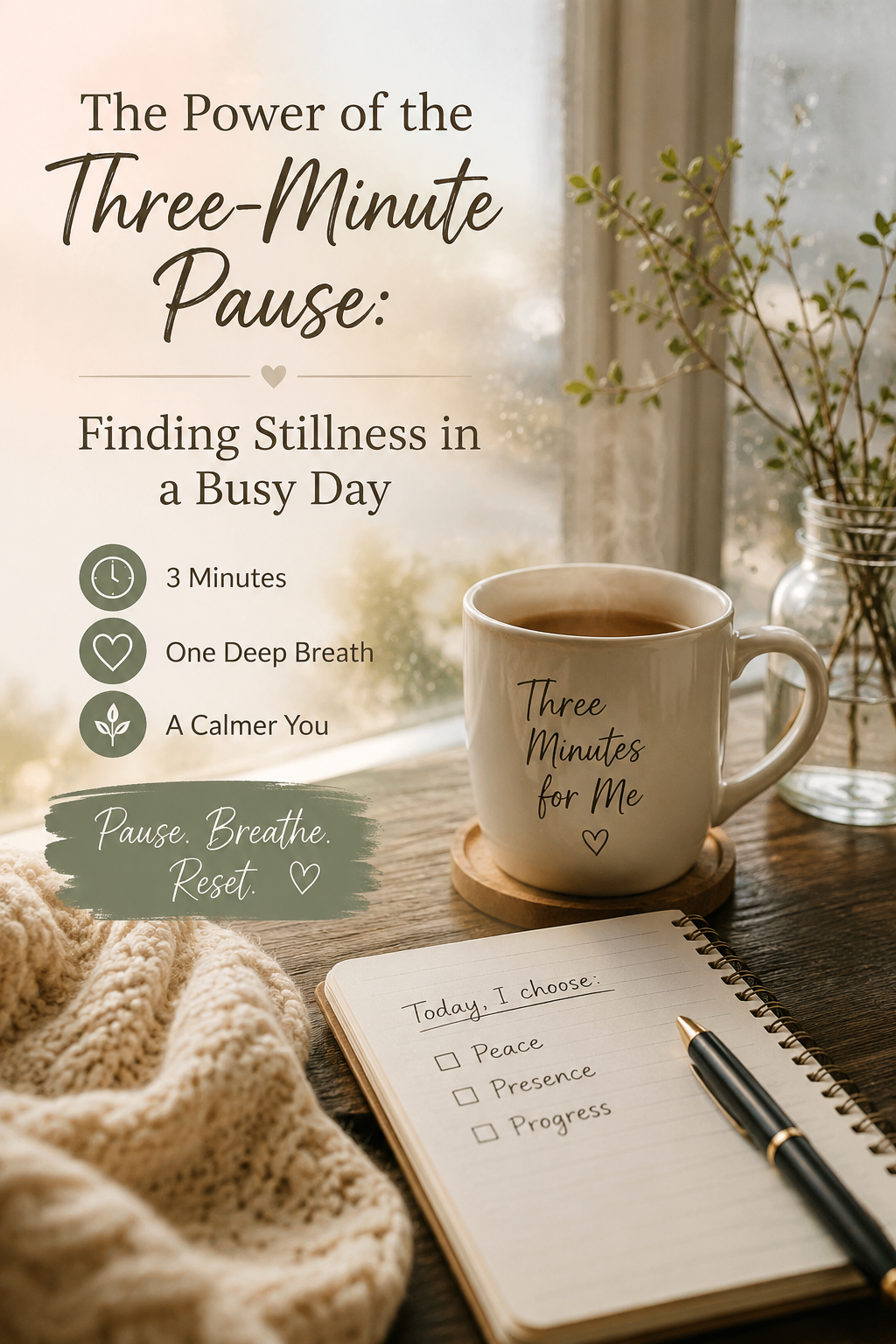
Cozy warm workspace with a hot mug of coffee and beautiful view
Freshly Brewed Thoughts

The Blog

Freshly brewed thoughts for the weary soul.

September Is the Real New Year: 5 Ways to Reset Without Adding to Your Plate
Mindfulness by coffee

September Is the Real New Year: 5 Ways to Reset Without Adding to Your Plate

January arrives with bright promises. New calendars. New goals. New versions of ourselves waiting to be built. September feels different. The light begins to soften. The mornings carry a little more structure. Notebooks appear in bags. Calendars fill again. Even if you are long past school, there can be something familiar about this seasonal turning. A quiet sense of beginning. For many of us, September feels more like the real New Year because it carries the memory of returning. Returning to classrooms, routines, projects, and one another. Returning from the looseness of summer to a rhythm that asks us to gather ourselves gently. Behavioral scientists sometimes call this feeling the fresh start effect. A new season, month, week, or birthday can create a psychological pause between what has been and what might unfold next. You can read more about the research behind that idea in this overview from Psychology Today. But a fresh start does not have to mean a complete reinvention. You do not need a new planner, a stricter routine, or a five-step plan for becoming unrecognizable by October. You are not behind because January’s intentions changed shape. You are not broken because summer was tiring, scattered, or not quite what you hoped it would be. September can simply be a doorway. A place to pause. A place to notice what would make the coming season feel a little more supportive. And perhaps, a place to begin again without adding more weight to an already full plate.

A gentler kind of reset

Our recent reflections on back-to-school rhythms and slowmaxxing have been circling a similar truth. The softer life is not built by collecting more habits. It is shaped by paying attention to what is already here. Sometimes the most meaningful reset is subtractive. You remove one source of noise. You loosen one expectation. You make a small corner of the day easier to inhabit. The following five invitations are not assignments. They are places to begin listening.

1. Pause and notice before you change anything

The first step of a September reset can be doing less. Before you make a list of what to improve, take a quiet moment to notice how you are actually arriving at this season. Perhaps you sit near a window with coffee. Perhaps you take a slow walk after dinner. Perhaps you write a few lines while the dishes dry beside you. There is no need to make the moment beautiful or profound. You are simply creating enough stillness to hear yourself beneath the noise.

You might ask:

  • What has felt nourishing lately?
  • What has felt heavier than it needs to?
  • Where have I been rushing?
  • What am I quietly longing for?
  • What would I like to experience more often this fall?
  • What am I ready to place down?

Try to answer without turning your reflection into a performance review. You do not need to prove that you used summer well. You do not need to explain every unfinished goal. This is only a check-in. A hand placed gently over the heart of your daily life. If journaling helps you listen, you might make this a five-minute practice. Our quiet reflection on returning to the parts of yourself you may have set aside can offer another place to begin.

2. Clear one small source of friction

A reset does not always require adding something new. Sometimes it means making one existing thing less difficult. Think of the small irritations that greet you regularly. The charger that is always missing. The overflowing inbox you avoid opening. The chair covered in clothes. The kitchen counter that never quite becomes clear. The phone that rests beside your bed and pulls you into the day before you have found your breath. You do not have to organize your whole home or create a perfect digital system. Choose one small source of friction. One. Then soften it. You might place your keys in the same bowl each evening. Unsubscribe from five emails. Move distracting apps off your home screen. Keep your journal beside your coffee maker. Put tomorrow’s clothes on the back of a chair. The goal is not control. It is kindness toward your future self. A little less searching. A little less deciding. A little more room to move through the morning without immediately feeling behind. What is one repeated inconvenience you could make 10 percent easier? That may be enough for today.

3. Choose a soft intention Goals often arrive wearing heavy shoes. They ask you to measure. To optimize. To become more disciplined, more focused, more productive, more everything. An intention can feel different. It is less like a finish line and more like a direction. Instead of asking, “What do I need to accomplish this season?” you might ask:

How do I want to feel while I move through it?

Your answer could be:

  • Spacious
  • Present
  • Steady
  • Rested
  • Curious
  • Connected
  • Less hurried
  • More honest

Choose one word or phrase that feels like a small lamp in the window. Let it guide you without becoming another standard you can fail to meet. If your intention is steadiness, perhaps you pause before answering a message. If it is presence, perhaps you leave your phone in another room during one meal. If it is rest, perhaps you stop treating every open evening as an opportunity to catch up. If it is connection, perhaps you send one thoughtful message each week. A soft intention does not demand that every day reflect it perfectly. It gives you something to return to. Like returning to the warmth of a mug between both hands. If you would like a little structure for this kind of reflection, our Gentle Roadmap for Intentional Goal Setting offers a slower way to move from listening into action.

4. Restore one supportive rhythm Summer can loosen the edges of the day. That can be beautiful. It can also leave you feeling as if your sleep, meals, work, and rest are floating in separate directions. When September arrives, you may not need a brand-new routine. You may simply need to restore one rhythm that used to support you. Not all of them. One. Perhaps it is a gentle bedtime window. Perhaps it is eating lunch away from your desk. Perhaps it is a Sunday morning walk, a weekly grocery rhythm, or ten minutes of quiet before checking notifications.

You might begin with an anchor that already belongs naturally in your day:

  • The first sip of coffee
  • The moment you close your laptop
  • The time you brush your teeth
  • The walk from your car to the door
  • The few minutes before sleep

Attach a small moment of awareness to that existing point. When the coffee brews, notice the light. When the laptop closes, take one full breath. When you get into bed, allow the day to be finished for now. This is how sustainable habits often unfold. Not through force. Through returning. The Daily Sip follows this kind of gentle cadence, weaving stillness, reflection, and restoration into ordinary parts of the week. A supportive rhythm should meet you on difficult days, too. If it only works when you are well-rested and ahead of schedule, it may be asking too much.

5. Leave room for transition

September can be full of movement. New classes. New projects. New expectations. New versions of old responsibilities. Even welcome change can make the nervous system feel crowded. You may need more transition space than you think. A few minutes between work and home. A quiet pause before opening your messages. An evening without plans. A morning that is not immediately filled with decisions. Transition space allows one part of your life to settle before the next one begins. It is the breath between sentences. You can create it in small ways. Sit in the car for two minutes before going inside. Take a short walk after work without listening to anything. Wash one dish slowly instead of rushing through the entire kitchen. Let yourself finish your tea before standing up to do the next thing. You might also protect one piece of unclaimed time each week. Not time for errands. Not time for catching up. Not time that secretly belongs to a future task. Just time that can remain open. At first, open space may feel uncomfortable. We are so used to filling every quiet pocket that stillness can feel like an unfinished chore. But slowly, the silence may begin to feel like a room you can enter.

Beginning again, gently

A September reset does not need to be dramatic to be real. You can begin by noticing. You can clear one small obstacle. You can choose an intention that feels kind enough to carry. You can restore one rhythm. You can leave a little space around the life that is already unfolding. There is no perfect way to enter a new season. Some days will feel focused. Some will feel foggy. Some will ask you to return to the basics: food, water, sleep, warmth, one manageable thing at a time. That still counts. Beginning again does not mean becoming someone else. It may mean coming back to yourself with less judgment. Coming back to the parts of you that need quiet. Coming back to a pace that allows your creativity, attention, and peace to remain intact. So if September feels like your real New Year, let it be a gentle one. No grand promises. No punishment for what did not happen. Just a small clearing. A warmer rhythm. A little more room to listen. What would you like to make easier as this season begins? And what might you be willing to leave behind? Take what you need.

Until the next quiet cup, be gentle with yourself. The Random Coffee Break Team

Slowmaxxing, Explained in Under 3 Minutes: The Anti-Hustle Trend We Can Get Behind
Self-Awareness by coffee

Slowmaxxing, Explained in Under 3 Minutes: The Anti-Hustle Trend We Can Get Behind

There is a new word making its way through the wellness corner of the internet. Slowmaxxing. It sounds a little like another optimization project. Another habit to perfect. Another version of yourself to become. But underneath the internet-friendly language is something much softer. Slowmaxxing is the intentional practice of moving through ordinary moments with less urgency and more presence. Making your coffee without scrolling. Walking without rushing. Eating without answering messages. Allowing one thing to be one thing. The word may be new. The longing behind it is not.

What does slowmaxxing mean

The word combines “slow” with the internet suffix “-maxxing,” which is usually used to describe maximizing or optimizing something. People talk about sleepmaxxing, looksmaxxing, productivitymaxxing, and countless other ways to improve, refine, or upgrade the self. Slowmaxxing gently turns that idea in another direction. Instead of maximizing output, you are making room for depth. Instead of squeezing more into the day, you are noticing what is already here. Instead of treating every habit as a performance, you are letting the moment unfold at its natural pace. Recent coverage from VICE and the Newport Institute describes slowmaxxing as a response to burnout, constant rushing, and the pressure to keep optimizing every part of life. That pressure can become exhausting. Even rest can start to feel like something you need to do correctly. You may find yourself tracking your sleep, timing your meditation, planning your leisure, and wondering whether you are relaxing efficiently enough. Slowmaxxing offers another possibility. What if your life does not need to be maximized today? What if it needs to be inhabited?

Why this trend resonates

You may already know what it feels like to move through a day with your attention scattered across too many places. A message arrives while you are making breakfast. A meeting begins while you are still thinking about yesterday. You eat lunch while reading an article. You answer one more email while brushing your teeth. By evening, you have completed many things. But you may not feel as though you were fully present for any of them. This is not a personal failure. You are not wrong for feeling tired. Your attention has been invited, requested, and pulled in a hundred directions. Of course your inner world feels noisy. Slowmaxxing resonates because it names a quiet refusal. A refusal to believe that every minute must be productive. A refusal to measure your worth by how much you can carry. A refusal to rush through your own life simply because the world is moving quickly. At The Random Coffee Break, we call this choosing softer rhythms. Softer rhythms do not mean giving up on your responsibilities, dreams, or growth. They mean creating a more sustainable relationship with them. You can still build. You can still change. You can still move forward. You simply do not have to abandon yourself in the process.

A gentle reset from the noise

Before trying slowmaxxing, it may help to notice where urgency has become your default setting. Not to criticize yourself. Just to listen.

You might notice:

  • You hurry through meals, even when you have enough time.
  • You reach for your phone during every small pause.
  • You feel uncomfortable when nothing is being accomplished.
  • You move from one task to the next without taking a breath.
  • You think of rest as something you need to earn.
  • You feel guilty when your pace does not match someone else’s.
  • You finish a day unsure where all your energy went.

These patterns often form quietly. They may have helped you survive demanding seasons. They may have helped you meet deadlines, care for other people, or keep going when there was no room to stop. They are not enemies. They may simply be tired strategies that have not yet learned they are allowed to soften. A reset does not need to be dramatic. You do not need to delete every app, move to the countryside, or redesign your entire life.

You might begin by asking: Where am I rushing when I do not actually need to rush?

Let the answer arrive slowly.

How to try slowmaxxing without turning it into another project

The heart of slowmaxxing is presence, not perfection. If you create a strict plan with targets, scores, and consequences, you may simply rebuild the same pressure in softer clothing. There is no slowmaxxing streak to protect. No perfect morning routine to maintain. No failure waiting at the end of a rushed day. You are experimenting with a different pace. Here are a few quiet practices to try.

1. Choose one ordinary moment

Begin with something that already happens. Your first cup of coffee. The walk from your desk to the kitchen. The few minutes before you get into bed. Choose one moment and let it be undivided. When you make coffee, notice the sound of the water. Feel the warmth of the mug. Watch the steam rise. Allow those three minutes to belong only to making and receiving the coffee. The practice is not about making coffee beautifully. It is about being there while it happens. If you enjoy coffee as a daily ritual, you can also visit The Random Coffee Break’s three-minute pour-over for a simple invitation to pause.

2. Do one thing at a time

Multitasking can make a day feel efficient, but it often leaves your mind carrying several unfinished moments at once. You might try giving one task your full attention for five minutes. Wash the dishes. Fold the laundry. Read two pages. Water a plant. Listen to a friend. Notice the difference between completing something while mentally elsewhere and completing it while your hands, eyes, and attention are in the same place. There may be no dramatic transformation. Perhaps there is only a little less fog. A little more contact with your own life. That is enough for today.

3. Leave a small space between things

Transitions are often where the rushing gathers. You finish work and immediately begin dinner. You close your laptop and open your phone. You walk through the door carrying the entire day with you. A transition ritual can be very small. Stand by the window before starting the next task. Take three unhurried breaths. Change into comfortable clothes. Wash your hands and notice the warmth of the water.

Ask yourself: What am I carrying that does not need to come with me?

You may not have an answer. The question itself can become a doorway. For another accessible pause, you might explore The Power of the Three-Minute Pause.

4. Let your senses lead

When your thoughts feel loud, your senses can offer a quiet path back. Notice five ordinary details around you. The texture of your sleeve. The hum of the refrigerator. The scent of soap on your hands. The shape of light on the floor. The first sip of something warm. You do not need to force calm. You are simply giving your attention somewhere gentle to land. The mind may wander. That is normal. Returning is the practice.

5. Protect one unoptimized moment

Choose a few minutes that do not need to produce anything. No podcast. No educational video. No personal development goal. No background content to fill the silence. You might sit on the porch. Look out a window. Lie on the floor. Drink tea. Do nothing in particular. At first, this may feel strangely uncomfortable. You may notice the urge to reach for your phone or find a more useful activity. You are not doing it wrong. The discomfort is often part of remembering how to be with yourself again.

Slowmaxxing is not about moving slowly all the time

Some days are full. Some seasons ask for speed. There will be appointments, deadlines, school drop-offs, emergencies, and moments when moving quickly is the kindest thing you can do. Slowmaxxing is not a demand to make every day quiet. It is an invitation to notice where urgency has become automatic. You can move quickly when it is necessary. You can move slowly when it is possible. You can learn the difference. This is where slow living becomes practical rather than aspirational. It meets you in the kitchen with dishes in the sink. It meets you at your desk between meetings. It meets you on the bus, in the grocery store, and beside the bed when you are too tired to do anything elaborate. As we explored in Slow Living 101, the goal is not to escape your real life. It is to return to it with a little more attention.

Taking the practice home

The internet may call it slowmaxxing. You might call it a coffee break. A breath. A walk without your phone. A meal eaten while sitting down. A decision to stop answering messages for the evening. The name matters less than the permission underneath it. Permission to move at your own pace. Permission to stop optimizing every part of yourself. Permission to let a quiet moment remain quiet. Tonight, you might try one small thing. Place your phone in another room while you drink something warm. Notice the cup in your hands. Notice your shoulders. Notice the room around you.

Ask yourself: What would change if I trusted that this moment did not need to be used?

You do not have to solve the whole season. You do not have to become a slower person overnight. You are only making a little room for clarity to find you. The noise can wait for a few minutes. The world can wait for five.

Until the next quiet cup, The Random Coffee Break

Why Back-to-School Season Hits Adults, Too: A Gentle Transition Guide
Self-Awareness by coffee

Why Back-to-School Season Hits Adults, Too: A Gentle Transition Guide

September has a particular kind of energy. The light begins to change. The mornings feel a little more structured. Somewhere, a backpack is being zipped. A new notebook is opening. Calendars are filling again after the looseness of summer. Even if you are not returning to school, you may feel the shift. A quiet pressure. A sense that it is time to begin again. And perhaps, beneath the fresh-start feeling, there is unease. You may feel tired before the season has even started. You may feel as if you should have a plan, a routine, a goal, and a renewed sense of purpose waiting neatly on the other side of August. You are not wrong for feeling this way. You are not behind. You are not failing at the transition. Sometimes, the body notices a change in rhythm before the mind has found words for it.

The September Feeling

Back-to-school season carries more than school supplies and adjusted bedtimes. It carries memory. For many adults, this time of year once meant new teachers, new expectations, social uncertainty, performance, comparison, and the familiar question of whether you would be enough. Enough prepared. Enough capable. Enough interesting. Enough ahead. The calendar may have changed, but the nervous system can remember. A new season can stir old feelings, even when your current life looks completely different.

You might notice: A low hum of dread about the months ahead Trouble settling into sleep Irritability or scattered thinking Pressure to make a dramatic fresh start Grief for the slower days of summer Anxiety about work becoming busier Guilt about not accomplishing more during the warmer months A wish to disappear beneath a blanket until everything feels settled

For parents and caregivers, September may bring a heavier mental load. There are schedules to coordinate, supplies to purchase, meals to plan, transportation to arrange, and emotions to hold. For adults without children, the season can still create a change in pace. Workplaces may become busier. Colleagues may return from vacation. Social calendars may fill. The general atmosphere may begin asking for more of you. This kind of future-focused worry is often called anticipatory anxiety. The American Psychological Association describes anticipatory anxiety as the unease that can arise when you imagine what might happen next. There is nothing strange about feeling unsettled before a transition. Your mind is trying to prepare. Your body is trying to find solid ground.

You Do Not Have to Become a New Person

September often arrives wrapped in the language of reinvention. Fresh start. Back to routine. New goals. Better habits. A more organized version of you. But you do not need to become someone else to move into a new season. You may simply need to return to yourself. There is a difference between a reset and a renovation.

A reset asks: What would help me feel a little more supported?

A renovation asks: What is wrong with everything, and how quickly can I replace it?

One leaves room for listening. The other begins with criticism. At The Random Coffee Break, we believe in a softer rhythm. A sustainable rhythm. The kind that unfolds gradually, like morning light moving across a kitchen floor. You do not have to rebuild your entire life before the first of September. You might begin with one small place to land.

A Gentle September Reset A reset does not have to mean adding more. Sometimes, it means making space.

1. Name the transition Before you try to solve the feeling, notice it. You might place a hand over your heart while your coffee brews and say:

September feels like a lot for me. Or: I am carrying some pressure about beginning again. Or: Part of me is excited, and part of me is bracing.

Both can be true. Naming an emotion does not make it larger. Often, it gives the feeling somewhere to rest. You are not required to be enthusiastic about every new beginning. You are allowed to arrive slowly.

2. Choose one anchor

When everything feels in motion, begin with one predictable point in the day.

Perhaps it is:

  • Drinking water before checking your phone
  • Opening the curtains at the same time each morning
  • Taking three quiet minutes before work
  • Eating one meal without multitasking
  • Turning off the kitchen light at the same time each evening
  • Writing down tomorrow’s first step before bed
  • Let the anchor be small enough to keep on a difficult day.

A routine should support you, not become another measure of your worth. If you miss it, you have not failed. You simply return when you can.

3. Build in a little space Transitions often feel harder when every moment is accounted for. A ten-minute buffer can become a small bridge between one responsibility and the next. You might leave a little earlier. You might sit in the car before walking inside. You might wash the dishes slowly after dinner rather than carrying the day straight into bed. You might protect the first five minutes after work from messages and news. This is not wasted time. It is the space where your mind catches up with your body.

Build the Practice Through Reflection

Once you have named the season and created one small anchor, you can begin listening more closely. A journal can help you separate the present moment from the old stories September may bring with it. You do not need a perfect notebook. A few lines on the back of an envelope can be enough.

September journaling prompts

Choose one prompt.

Let one question be enough for today.

  • What does September bring up in me before anything has actually happened?
  • What am I excited to welcome into this season?
  • What am I afraid I will not be able to handle?
  • Which expectations belong to me, and which ones have I absorbed from other people?
  • What did summer teach me about the pace I actually need?
  • What would a gentle beginning look like in my current season of life?
  • What am I allowed to do less of this month?
  • What old school-related feeling still visits me when I think about starting over?
  • What would I say to the younger version of me who felt pressure to prove their worth?
  • What do I want to carry forward, and what can remain behind?
  • You do not need to answer beautifully.
  • You do not need to find a lesson.

You can write: I do not know yet. That is still a form of honesty. That is still reflection. Let the page be a place where the noise can soften.

Make the Practice Sensory

When the mind becomes foggy with future plans, return to what is near. The warmth of the mug in your hands. The sound of water moving through the coffee grounds. The weight of a pen. The clean page waiting without judgment. The sweater you reach for when the morning air turns cool. These ordinary details can help remind you that you are not living in the whole season at once. You are living this morning. This breath. This small patch of light. If you are new to mindful practices, you might begin with a three-minute meditation. There is no need to sit perfectly still. There is no need to empty your mind. You can simply notice the inhale. Notice the exhale. Notice when your thoughts wander. Then return gently. The practice is not in never leaving the moment. The practice is in finding your way back.

Take the Reset Home A September reset becomes more sustainable when it lives in ordinary places. Not only in your journal. Not only during a carefully planned morning. It can come with you into the kitchen, the car, the office, and the evening. You might create a small transition ritual at the end of your workday. Close the laptop. Write down what can wait. Wash your hands. Change into softer clothes. Make something warm. Let your body hear the message that the workday has ended. You might also choose one screen-free pause each day. The Quiet Cup practice offers a simple beginning: sit with your coffee, tea, or water for five minutes without asking yourself to be productive. No scrolling. No catching up. No improving. Just a cup, a breath, and the quiet presence of you.

You can also explore slow living as a way to reclaim your focus from the noise. The goal is not to make every day calm. The goal is to create a few places where calm can find you.

A Softer Way Forward

The back-to-school season may continue to bring mixed feelings. There may be excitement. There may be grief. There may be relief, worry, tenderness, and fatigue sitting together at the same table. You do not have to choose only one emotion to be allowed into the new season. You do not have to turn September into proof that you are organized, healed, or ready for anything. You can begin while uncertain. You can move forward while tired. You can make a fresh start without making a spectacle of it. As autumn unfolds, we will continue exploring the small practices that help us meet changing seasons with more steadiness: reflective journaling, quieter routines, mindful pauses, and the gentle rebuilding of a life that feels like home. And when the colder months arrive, our Winter Arc reflections will offer another place to pause, listen, and move inward without disappearing from yourself. For now, let this be enough: September is not a test. You are not late. You do not need to rush toward clarity. Perhaps today, you can open the window. Pour something warm. Write one honest sentence. Then let the rest of the season arrive in its own time. Take what you need.

Until the next quiet cup. The Random Coffee Break

The Art of the Non-Negotiable Pause: Building a Midday Reset That Actually Works
Self-Awareness by coffee

The Art of the Non-Negotiable Pause: Building a Midday Reset That Actually Works

By midday, you may already feel far away from yourself. The morning has been filled with emails, errands, meetings, messages, school drop-offs, decisions, and small interruptions that quietly gather weight. You look at the clock and realize you have been moving for hours without taking a single full breath. Perhaps you tell yourself that you will rest later. After lunch. After this task. After everything is finished. But everything is rarely finished. There is always another message waiting. Another load of laundry. Another tab open in your mind. So what if your midday reset did not need to be an hour? What if it only needed to be a few intentional minutes?

A pause does not need to be earned

Many of us carry the idea that rest comes after productivity. First, you must complete the work. First, you must catch up. First, you must prove that you have done enough. Only then can you sit down with your coffee while it is still warm. But a pause is not a reward for being efficient. It is part of how you remain connected to yourself while moving through an ordinary day. You are not lazy for needing a moment away from the screen. You are not failing because your attention feels scattered. You are not broken because your body is asking for quiet. You are a person living inside a very loud rhythm. A small pause can be a way of softening that rhythm.

What makes a midday pause restorative

A reset does not have to be elaborate. It does not need a special cushion, an app, a journal with the perfect prompts, or a completely empty calendar. It simply needs to create a little distance between you and the demands of the day. A useful pause often includes three gentle elements: A change of place, even if you only move to a different chair. A change of attention, away from work and toward your senses. A small act of care, such as drinking, breathing, stretching, or stepping outside. The most important part is that the pause feels different from the work surrounding it. If you spend your break answering messages while eating lunch, your body may be technically away from the task, but your mind is still standing inside it. Research on micro-breaks supports this simple idea. A 2022 systematic review and meta-analysis found that brief breaks were associated with greater vigor and less fatigue, even though their effects on performance varied depending on the task and the length of the pause. Read the full review in PLOS ONE. You do not need to turn this into another performance project. The point is not to return as a more optimized version of yourself. The point is to return with a little more room inside you.

Begin with a warm drink There is something grounding about holding a warm cup in both hands. The heat arrives before the thoughts settle. The steam rises. The mug gives your hands somewhere to be. Your midday drink can become a small threshold between one part of the day and the next. Make coffee, tea, cocoa, or warm water with lemon. Then, if you can, leave your phone somewhere behind you. Sit near a window. Notice the weight of the cup. Notice the temperature against your palms. Take one sip before deciding what comes next. This is not about drinking mindfully in a perfect way. Your thoughts may still hurry. You may remember three tasks you forgot. You may feel the familiar pull toward your inbox. That is all right. You can notice the pull and return to the cup. Return to the warmth. Return to the small, ordinary truth that you are here. If five minutes feels impossible, begin with two. A pause can still count when it is brief.

Step outside, even briefly The outdoors does not have to mean a long walk through a forest. It might mean standing on a porch. Walking to the end of the block. Sitting on the front step. Looking up from a parking lot and allowing the sky to enter your awareness. A change of scenery gives your attention something new to rest upon. You might notice: The temperature against your skin. The shape of a cloud. The sound of a passing car. The texture of the pavement. The color of one nearby tree. The way light rests on a wall. You do not have to make the walk brisk. You do not have to track the distance. You do not have to turn it into exercise unless movement feels nourishing today. You can simply step outside and let your senses remind you that the world is wider than the screen in front of you. One study included in the PLOS ONE review examined brief views of greenery and found that even a short visual connection with nature may support attention. You can read more about the research on micro-breaks and attention restoration. The practice can be very small. Open the door. Feel the air. Let your eyes travel farther than the next notification.

Breathe without an app Sometimes even a helpful app feels like one more thing to open. One more instruction to follow. One more measure of whether you are doing enough. You can breathe without an app. You can sit in your chair, place both feet on the floor, and notice what your breath is already doing. There is no special pattern you need to force. There is no correct emotional state you need to reach. Try this quiet practice: Let your shoulders lower, if they are willing. Unclench your jaw. Feel your feet against the floor. Notice one ordinary inhale. Notice one ordinary exhale. Allow the next breath to arrive without directing it. Continue for one minute, or a little longer. Your attention may wander. That is not a mistake. You may feel impatient. That does not mean the practice is failing. Breathing is not a test of calmness. It is simply a way to sit beside yourself for a moment. If focusing on your breath feels uncomfortable, let your attention rest on another sensation instead. The hum of the refrigerator. The warmth of your sleeves. The chair beneath you. The sound of water moving through the pipes. Stillness can begin with noticing what is already here.

A five-minute reset for crowded days Some days offer only a small opening. That opening is still worth protecting. You might try this five-minute rhythm: Minute one: Leave the work behind. Close the laptop or turn your screen face down. Set your phone out of reach, if possible. Stand up slowly. Minutes two and three: Change your surroundings. Step outside, move to another room, or stand near a window. Let your eyes soften. Notice three things you can see and two things you can hear. Minutes four and five: Return to one simple sensation. Take a sip of water or tea. Feel your feet on the floor. Breathe naturally. Ask yourself, “What do I need for the next small part of the day?” Not the whole week. Not your entire life. Just the next small part.

A ten-minute reset for a little more space

When you have ten minutes, allow the pause to unfold more slowly. You might spend the first three minutes preparing something warm to drink. Then step outside or walk gently through your home for another three minutes. Use the final four minutes to sit without a screen. You could write a few words in a notebook: What feels noisy right now? What can wait until later? What would make the afternoon feel a little softer? What is one thing that truly needs my attention next? You do not need to solve everything you write down. Reflection is not always about finding an answer. Sometimes it is simply a way to set the fog on the table where you can see it.

When the pause feels impossible

You may be thinking, “This sounds lovely, but I do not have ten minutes.” Perhaps your workday is tightly scheduled. Perhaps you are caring for a child, supporting a family member, or working in a role where stepping away is complicated. Perhaps your midday is already filled with obligations. You are not doing anything wrong. Your pause may need to be adapted to the life you actually have. Try a doorway pause between two tasks. Drink water before opening the next email. Take three slower breaths while waiting for the kettle. Look out the window while your lunch warms. Stand up during a phone call, if that feels possible. Put one hand over your heart while washing a dish. These moments may not look like traditional self-care. They still create a small opening. And small openings matter.

Protect the pause gently

Calling it non-negotiable does not mean becoming rigid. It means allowing your care to have a place in the day before the day takes everything. You might place a recurring reminder on your calendar. You might tell a colleague, “I will be away from my screen for ten minutes and will respond afterward.” You might keep a mug, journal, or sweater near the place where you usually pause. You might pair the reset with something that already happens, such as lunch or the afternoon cup of tea. The goal is to reduce the number of decisions required. And when the pause does not happen, you do not need to begin again with shame. There is no streak to protect. There is no failure to record. You can return at the next available moment. The practice is not perfection. The practice is returning.

Let the afternoon begin again

A midday pause may not erase the difficult parts of your day. It may not make the inbox disappear. It may not resolve the conversation you are carrying or give you unlimited energy. But it can offer a small place to meet yourself again. A warm drink. A little fresh air. One unmeasured breath. A few quiet minutes in which you do not have to produce, respond, improve, or explain. What might change if you stopped waiting for the perfect hour to rest? What if your reset could be as simple as stepping away before you reach the point of exhaustion? What would feel supportive today: warmth, movement, silence, or a view of the sky? You do not need to take the whole day back at once. You only need to make a little room. The world can wait for five minutes. And you are allowed to be there for them.

With warmth and quiet stillness, The Random Coffee Break Team

The Random Coffee Break shares reflections and practical ideas for personal growth and mindful living. Our content is for informational and personal reflection purposes only, not medical or mental health advice. If you are experiencing distress or need professional support, please seek care from a qualified professional.

The Anti-Optimization Routine: Why Tracking Your Wellness Might Be Making You More Stressed
Healing by coffee

The Anti-Optimization Routine: Why Tracking Your Wellness Might Be Making You More Stressed

You woke up this morning and reached for your phone before your feet even touched the floor. Not to scroll social media. Not to check the weather. You opened an app to see how deeply you slept. Seventy-four percent. A gentle alert tells you your recovery score is "sub-optimal." Before you have even tasted water, before the kettle has begun to hum on the stove, your nervous system receives a silent, subtle memo: You are failing at rest.

We live in an era that has weaponized self-care. Somewhere between the rise of productivity hacks and the endless grid of wellness dashboards, we decided that peace was something to be measured. We track our steps. We count our ounces of water. We monitor our resting heart rate, our macros, our meditation streaks, and our sleep stages. We turned stillness into a KPI. And then we wondered why our shoulders feel permanently hitched toward our ears. If you have ever felt a prickle of guilt because your wearable buzzed to tell you your sleep was restless, you are not broken. You are simply caught in the quiet trap of optimization culture.

How Hustle Culture Sneaked Into Our Wellness

Hustle culture used to be loud. It wore tailored blazers and praised the grind. It told us to wake up at 4:30 AM and hustle until midnight. Eventually, we realized that made us sick. So we pivoted toward wellness. We traded corporate burnout for wellness burnout. We replaced the pressure to produce output with the pressure to optimize our biology. Suddenly, rest isn't allowed to just be rest. It has to be productive rest. Your walk in the park isn't a quiet wandering among trees; it’s ten thousand steps logged for cardiovascular compliance. Your morning coffee isn't a warm pause in a chaotic world; it's a timed ritual squeezed between journal prompts and breathwork timers.

We took the gentle, tender act of caring for ourselves and draped it in the rigid language of data analytics. Is it any wonder we feel so anxious? When every breath and heartbeat is graded, your body stops feeling like a home. It starts feeling like a performance review.

The Heavy Cost of Being Measured

There is a profound psychological weight that comes with constant self-monitoring. It whispers a quiet lie: What is unmeasured does not matter. If you didn't log your meditation, did your mind truly quiet? If you walked without your phone in your pocket, did the movement count? When we outsource our inner knowing to a little glass rectangle on our wrist or an app on our screen, we slowly unlearn how to listen to ourselves. You stop asking: How do I feel? You start asking: What does the app say? This disconnect creates a strange kind of loneliness. You can have a sleep score of ninety-two and still wake up feeling bone-tired because your soul is starving for unscripted ease. You can drink three liters of water down to the exact milliliter and still feel parched for permission to simply exist without improving yourself.

Toward Softer Rhythms

At The Random Coffee Break, we talk a lot about softer rhythms. We believe that true self-care is not another project to manage. It is an unravelling. It is the radical permission to let some things remain unmeasured, untracked, and unoptimized. Not all progress needs a graph. Not every morning needs a score. Sometimes, healing looks like closing the tracking apps and opening the window.

This is where the Anti-Optimization Routine begins. It is not an aggressive rejection of technology or structure. It is an invitation to reclaim your inner authority. It is a gentle return to the wisdom of your own nervous system.

Simple Practices for an Untracked Life

You don't need to throw your smartwatch in the river or delete every app on your phone. You can simply carve out small, sacred pockets of untracked freedom throughout your day.

Here are a few quiet practices to help you soften:

Hydrate without the tally. Fill a favorite ceramic mug with water or warm tea. Sip it slowly. Do not count the ounces. Let the simple act of swallowing be enough.

Walk without the distance. Step outside for ten minutes without your phone, your fitness tracker, or your headphones. Notice the rhythm of your boots on the pavement. Notice the color of the sky. Let your feet wander where they wish, not where a step goal dictates.

Sip your coffee without a timer. Pour your morning brew and sit down. Let the steam curl into the morning light. Resist the urge to read emails, listen to a podcast, or time your stillness. Just drink your coffee while it is warm.

Breathe without the pacing app. Close your eyes for sixty seconds. Inhale through your nose, exhale through your mouth. Let your breath find its own natural cadence, untethered from visual guides or vibrational feedback loops.

Notice what happens in those moments. There might be a brief flutter of discomfort: a phantom itch to check something, to record something, to prove something. That is just the echo of hustle culture leaving your body. Let it pass. Breathe through it.

Letting Go of the Scorecard

Intentional living does not require a spreadsheet. Mindfulness is not a high score you unlock by meditating for precisely twenty minutes every single day without missing a streak. Slow living is not an aesthetic achievement to be posted or perfected. It is simply the quiet, courageous choice to inhabit your life rather than manage it. It is realizing that your worth was never tied to your recovery metrics. You are allowed to have a heavy week where your sleep is messy and your energy is low, without labeling yourself as "sub-optimal." You are a human being, not a software update.

A Gentle Invitation for Today

As you finish reading these words, we invite you to try one tiny experiment. Pick one daily habit: just one. It might be your morning cup of coffee, your evening walk, or your bedtime stretch. Tomorrow, do it completely unmeasured. Leave the phone in another room. Close the tracking app. Ignore the streaks and the scores. Notice how it feels to do something purely for the sensation of it, rather than for the data it produces. Notice the quiet space that opens up when you stop trying to optimize your peace. The world can wait for five minutes. And your soul has been waiting much longer than that.

With warmth and quiet stillness, The Random Coffee Break Team

August with The Daily Sip: Consistency as a Gentle Practice
Mindfulness by coffee

August with The Daily Sip: Consistency as a Gentle Practice

Softening the grip on productivity July was the beginning. The launch of The Daily Sip opened the door. A small daily pause. A softer rhythm. And now, we are stepping into August together. A new month. A new invitation. A theme that does not ask you to push harder. Only to return. Again and again. This August, our theme is Consistency. Not hustle. Not perfection. Not proving something with a perfect streak. Just steady presence. Showing up gently, day after day. In the way that feels true to slow living. In the way that leaves room for breath. In the way that honors your humanity instead of judging it. At The Random Coffee Break, consistency is not about becoming a machine. It is about becoming more at home with yourself. It is about creating small rituals you can actually live inside. It is about remembering that you are not behind. You are not broken. You are allowed to begin softly. As you look through the calendar for August, you might notice something. None of these prompts ask you to do "more." In fact, many of them invite you to do less. On August 18th, we will talk about "Softening the Grip." We often hold onto our goals and our routines with such intensity that we choke the life out of them. We become so focused on the streak. The checkmark on the to-do list. The data in our tracking apps. But consistency in slow living is not about the data. It is about the feeling. How does it feel to know that no matter what happens in the world, you will have five minutes of peace? How does it feel to know that you are a person who keeps their promises to themselves? When we soften our grip, we allow the practice to become part of us. It is no longer something we are doing. It is who we are becoming. We are people who value stillness. We are people who listen to our own hearts. We are people who know how to begin again, even on the days when we feel lost in the fog.

The weekly rhythm Each day of the week carries its own gentle shape. Its own tone. Its own small doorway back to yourself. Here is the rhythm we will be moving through all month long: Mindful Mondays — "Begin the week gently — a grounded intention to carry into the days ahead." Take Care Tuesdays — "A soft reminder to tend to yourself with kindness." Wellness Wednesdays — "Small, steady ways to come back to your body and breath." Thoughtful Thursdays — "A reflective pause to notice how quietly you've grown." Feel Good Fridays — "A lighter note to close the week with warmth." Slow Saturdays — "Permission to move unhurried and rest without reason." Sacred Sundays — "Stillness, reflection, and space to simply be."

The power of the "Slow Saturday" For many of us, the weekend is a time where we try to cram in everything we didn't do during the week. The errands. The social obligations. The "deep cleaning" of our homes and our lives. But in August, we want to invite you into the concept of the Slow Saturday. On August 8th, the prompt is "Unhurried." Can you imagine a morning where you don't look at your watch? Where you let the coffee brew for as long as it takes. Where you watch the way the steam curls into the air without thinking about the next task. This, too, is consistency. It is the consistent choice to protect your peace. It is the practice of saying "no" to the rush so you can say "yes" to your own soul. These Saturdays are not wasted time. They are the time where you rebuild. Where you replenish the well so that you have something to give during the week ahead.

The full August calendar A gentle path for the month. One day at a time. Sat, Aug 1 — Slow Sat: "Stay the Course" Sun, Aug 2 — Sacred Sun: "Rest Deeply" Mon, Aug 3 — Mindful Mon: "Small Steps Count" Tue, Aug 4 — Take Care Tue: "Honor Your Pace" Wed, Aug 5 — Wellness Wed: "Consistent Care" Thu, Aug 6 — Thoughtful Thu: "Track Your Growth" Fri, Aug 7 — Feel Good Fri: "You Showed Up" Sat, Aug 8 — Slow Sat: "Unhurried" Sun, Aug 9 — Sacred Sun: "Be Still" Mon, Aug 10 — Mindful Mon: "One Day at a Time" Tue, Aug 11 — Take Care Tue: "Protect Your Energy" Wed, Aug 12 — Wellness Wed: "Gentle Discipline" Thu, Aug 13 — Thoughtful Thu: "What's Working" Fri, Aug 14 — Feel Good Fri: "Momentum" Sat, Aug 15 — Slow Sat: "Rest Without Rush" Sun, Aug 16 — Sacred Sun: "Quiet Reflection" Mon, Aug 17 — Mindful Mon: "Trust the Process" Tue, Aug 18 — Take Care Tue: "Soften the Grip" Wed, Aug 19 — Wellness Wed: "Steady Presence" Thu, Aug 20 — Thoughtful Thu: "Release Comparison" Fri, Aug 21 — Feel Good Fri: "You're on Your Way" Sat, Aug 22 — Slow Sat: "Permission to Pause" Sun, Aug 23 — Sacred Sun: "Return to Center" Mon, Aug 24 — Mindful Mon: "Begin Again" Tue, Aug 25 — Take Care Tue: "Nourish Yourself" Wed, Aug 26 — Wellness Wed: "Consistent Roots" Thu, Aug 27 — Thoughtful Thu: "Look How Far" Fri, Aug 28 — Feel Good Fri: "Keep Going Gently" Sat, Aug 29 — Slow Sat: "Stillness Is Progress" Sun, Aug 30 — Sacred Sun: "Prepare Softly" Mon, Aug 31 — Mindful Mon: "Finish Strong"

Returning to center By the time we reach the end of the month, on August 30th and 31st, we will focus on preparing softly. The transition from one month to the next doesn't have to be jarring. It can be a quiet bridge. We "Finish Strong" not by exerting more force, but by being fully present in our final steps. We acknowledge the roots we have grown. On August 26th, we will look at "Consistent Roots." The most important part of a tree is often the part you cannot see. The roots that stretch deep into the earth. Steady. Strong. Unseen. Your daily practice of stillness is your root system. It is what keeps you upright when the storms of life begin to blow. It is what allows you to find nourishment when the world feels dry and empty. Even on the days when you feel like nothing is happening. Even on the days when your mind is loud and your heart is heavy. If you sat for five minutes. If you took one mindful breath. You were growing your roots.

An invitation to show up softly We want to invite you to join us this August. Whether you have been with us since the first day of July, or you are just finding us now. There is a seat for you here. There is a cup waiting for you. You do not need to bring anything other than yourself. You do not need to be "good" at mindfulness. You do not need to have a quiet mind. You only need to have the desire to slow down. To listen. To be gentle with your own journey. We will be here every day, offering a small prompt. A quiet reflection. A reminder that you are enough, exactly as you are. If August is asking you to come back to yourself slowly, you are welcome here. If consistency has felt heavy before, maybe it can mean something softer now. Maybe it can look like one breath. One pause. One honest return. Come join us in August. Let this be the month you show up with tenderness. Let this be the month you keep yourself company. The world can wait for five minutes. Let us find that stillness together. May your August be steady. May your heart be soft. And may you find the beauty in the simple act of showing up. With warmth and stillness,

Introducing The Daily Sip: A New Rhythm for Your Quietest Moments
Mindfulness by coffee

Introducing The Daily Sip: A New Rhythm for Your Quietest Moments

The world does not often ask you to slow down. It asks for more. More speed. More noise. More of your presence, spread thin across a glowing screen. But here, in this small corner of the internet, we are building something different. Something that honors the space between the breaths. We call it The Daily Sip. It is not a challenge. It is not a task to check off a list. It is a gentle returning. A daily invitation to pause, just long enough for the steam to rise from your cup.

The Heart of the Rhythm It weaves together TRCB's three pillars: Sips of Stillness (daily reflection), Cupside Conversations (deeper dives into burnout, boundaries, reconnecting), and TRCB TV (atmosphere — rain sounds, fire crackles).

Your Weekly Ritual Day Theme

Mindful Monday Begin with a gaze — notice, set intentions on how you want to feel

Take Care Tuesday Soften, check in with the body

Warm Mug Wednesday Anchor in the sensory — the warmth, the aroma

Thoughtful Thursday A day for the mind — questions, prompts, quiet thoughts

Fresh Start Friday Release what you're carrying that no longer belongs

Slow Sip Saturday Linger — celebrate "unproductive" time

Stillness Sunday Rest, let the week settle like sediment at the bottom of a cup

Protecting Your Energy It talks about moving away from hustle culture, that "taking a break is revolutionary self-care," and focuses on softer rhythms — consistent progress like water shaping stone, not through force but persistence.

A Journey Taken Together It mentions Penny weaving the words and crafting each Sip with gentle care. Ends with a lovely invitation to prepare your space, find your favorite mug, and know that "the world can wait for five minutes."

Take what you need. Until the next quiet cup. Be gentle with yourself. ☕

The Quiet Cup Challenge: 5 Minutes Without a Screen
Healing by coffee

The Quiet Cup Challenge: 5 Minutes Without a Screen

The world is loud. Even when it is silent, it is loud. It vibrates in your pocket. It glows on your nightstand. It demands your attention before you have even found your breath in the morning. We are lived by our devices. We are tethered to a stream of information that never stops flowing, a digital tide that pulls us away from the shore of ourselves. You might feel it as a low hum of anxiety. A tightness in your chest when you see a notification. A sense that you are constantly running, even when you are sitting still. This is the weight of modern living. But there is a small way back. A gentle path toward slow living that doesn't require a mountain retreat or a complete life overhaul. It starts with a cup.

The Invitation

We call it the Quiet Cup. It is not a task. It is not another thing to add to your overstuffed to-do list. It is an invitation to inhabit five minutes of your own life. The concept is simple: sit with your coffee, your tea, or your water. And do nothing else. No scrolling. No emails. No "just one quick video." Just you. The steam. And the weight of the mug in your hands.

A Pillar of Stillness

The post ties into TRCB's three pillars — Stillness, Reflection, and Rebuilding — and positions the Quiet Cup as the purest expression of Stillness. It talks about how we've forgotten how to be still without being entertained, and reframes stillness as "the presence of you."

A Small Act of Rebellion

It frames the 5-minute screen-free sit as a quiet rebellion against hustle culture. Includes the line: "The world can wait for five minutes."

The Quiet Cup Challenge

Gentle invitation to try it once this week or every morning for seven days. No pressure — "you cannot fail." If your mind wanders, just notice and softly return to the warmth of your drink.

Finding Your Rhythm

Five gentle tips: Prepare with intention Leave the phone in another room Sit near a window Focus on the senses Be compassionate — start with 2 minutes if 5 feels too long

Take what you need. Until the next quiet cup. ☕

Your Gentle Roadmap for Intentional Goal Setting
Mindfulness by coffee

Your Gentle Roadmap for Intentional Goal Setting

The world often tells us that to grow, we must push. We are told to grind, to hustle, and to measure our worth by the speed of our progress. But here, in this quiet corner of the internet, we believe something different. We believe that growth can be as quiet as the morning light stretching across your floor. It can be as steady as the steam rising from your favorite ceramic mug. It can be gentle. It can be soft. And it can happen at exactly the pace you need it to. If you found your way here from Pinterest and you are ready for a softer kind of planning, you can grab your copy of the Guided Goal Setting Workbook here. Let it meet you where you are.

Reclaiming the Art of Intention

When we think about goals, we often feel a sense of pressure. A tightening in the chest. The weight of "should." I should be further along. I should be doing more. I should have it all figured out by now. But what if setting a goal wasn't about catching up to someone else? What if it was simply an act of listening to yourself? Setting an intention is like planting a seed in a garden you actually plan to tend. It is not a demand for instant bloom. It is an invitation for the roots to find their way.

Introducing the Guided Goal Setting Workbook

And when you are ready for a next step, this is where the roadmap begins to take shape. Over the past few months, we have been working on a tool to help you navigate this softer rhythm of movement. We wanted to create a space where your dreams could breathe. The Guided Goal Setting Workbook is now available in our website at www.TheRandomCoffeeBreak.com on the Shop page. It is a collection of 27 pages designed to gently guide you from intention into action. Not by rushing you. Not by pushing you. But by helping you see the path in front of you a little more clearly. This isn't a book of rigid commands. It is a gentle framework. A quiet roadmap for the parts of your life that matter most, acknowledging that you are a whole person, not just a list of tasks. There are spaces to explore your spirituality, your health, your finances, and your career. But there are also spaces for fun, for recreation, and for the relationships that sustain you. Because a life that is only focused on "output" is a life that is running on empty. If you have been craving a softer way forward, this workbook is meant to feel like a natural place to begin. A Gentle Structure for Your Days We use the SMART framework in this workbook: Specific, Measurable, Attainable, Relevant, and Time-oriented. But we use it as a lighthouse, not a leash. It helps us define what we need clearly, so we don't wander in the fog of "someday."

The workbook invites you into a simple, 6-step journey: Defining your goal with clarity. Breaking it down into small, manageable whispers. Setting a timeline that respects your season of life. Identifying the obstacles that might stand in your way. Finding solutions that feel like self-care, not self-punishment. Seeking support, because we were never meant to carry our dreams alone. You will find nine journal prompts tucked inside to help you peel back the layers of why these things matter to you. When the "why" is clear and soft, the "how" becomes less of a burden.

Planning with the Seasons

Consistency is the theme we are carrying through this month. Not the consistency of a machine that never stops. The consistency of the tides. The consistency of the breath. This workbook includes quarterly and monthly planning pages to help you see the bigger picture of your year. It offers weekly action plans so you can focus on just the next few steps. And perhaps most importantly, it includes reflection pages. Every month, you are invited to pause. To notice what happened. To look at your today, your three-month mark, and your year ahead. There is even a space to identify what you need to stop doing. Sometimes, the most productive thing we can do for our souls is to let something go. You will find sections to decide what to do less of, what to keep doing, and what to start doing. It is a process of curation. A way of editing your life so it feels like home.

A Revolutionary Act of Self-Care

Choosing to move intentionally in a world that demands speed is a revolutionary act. It is choosing yourself over the noise. It is choosing your wellbeing over the hustle. Whether you are a student trying to find your footing, a professional feeling the weight of the corporate hum, or a parent seeking a moment of stillness: this workbook was made for you. You do not have to have it all figured out today. You only have to take one small step. Maybe that step is just opening a page. Maybe it is just letting yourself dream.

An Invitation to Begin

If you feel ready to start moving toward your goals with a little more grace and a little less pressure, this is your invitation to begin. Your gentle roadmap is waiting. Pick up your copy at TheRandomCoffeeBreak.com under the Shop Page → Let it be a companion on your journey toward a more intentional life. Remember, the world can wait for five minutes. Your peace is worth the pause. Take a deep breath. You are doing enough. You are enough. May your coffee be warm and your rhythms be soft.

The Random Coffee Break Team

Introducing The Daily Sip: A New Rhythm for Your Quietest Moments
Healing by coffee

Introducing The Daily Sip: A New Rhythm for Your Quietest Moments

The world does not often ask you to slow down. It asks for more. More speed. More noise. More of your presence, spread thin across a glowing screen. But here, in this small corner of the internet, we are building something different. Something that honors the space between the breaths. On July 1st, we are inviting you to join us for a new rhythm. We call it The Daily Sip. It is not a challenge. It is not a task to check off a list. It is a gentle returning. A daily invitation to pause, just long enough for the steam to rise from your cup.

The Heart of the Rhythm

You may already know our three pillars. They are the foundation of everything we create at The Random Coffee Break. The Daily Sip is the thread that weaves them together into your everyday life. First, there is Sips of Stillness. This is our heart. It is the daily note, the reflection that meets you where you are. It is the quiet whisper that says, "You are here, and that is enough."

Next, there is Cupside Conversations. This is our voice. It is where we dive deeper into the things that matter. Burnout. Boundaries. The slow process of reconnecting with yourself. And finally, there is TRCB TV. This is our atmosphere. The sound of rain against a windowpane. The crackle of a distant fire. The visual space to simply be. The Daily Sip brings these elements into a structured, weekly cadence that protects your energy while encouraging consistent progress.

Your Weekly Ritual

Consistency is not about doing everything at once. It is about doing small things with great love. The Daily Sip follows a specific rhythm designed to mirror the natural ebb and flow of a mindful life. Mindful Monday We begin the week not with a sprint, but with a gaze.

Monday is for noticing. What does the light look like on your floor? How does the first sip of water feel? We set our intentions not based on what we must do, but on how we wish to feel.

Take Care Tuesday A day to soften. Often, by Tuesday, the momentum of the week begins to pull at us. We use this day to check in with the body. Perhaps it is a gentle reset. Perhaps it is simply choosing to sit for five minutes without a phone.

Warm Mug Wednesday The middle of the week can feel like a fog. Wednesday is our anchor. We lean into the sensory. The warmth of the ceramic against your palms. The aroma of the beans. We find grounding in the domestic rituals that usually go unnoticed.

Thoughtful Thursday This is a day for the mind. We ask a question. We listen for the answer. It might be a prompt from our shadow work reflections. It might be a quiet thought that has been waiting for space to unfold.

Fresh Start Friday As the week begins to close, we look at what we can release. What are you carrying that no longer belongs to you? We clear the mental clutter. We prepare for the stillness ahead.

Slow Sip Saturday Saturday is for lingering. The coffee can stay in the pot a little longer. The book can stay open on your lap. We celebrate the beauty of "unproductive" time.

Stillness Sunday The final breath of the week. We do not plan for Monday yet. We simply stay in the Sunday. We rest. We allow the week to settle like sediment at the bottom of a cup.

Protecting Your Energy

We have lived in the culture of the hustle for too long. We have been told that to stop is to fail. But we believe that taking a break is revolutionary self-care. The Daily Sip is built on the philosophy of energy protection. It understands that you are a human being, not a machine. You have days where the light is bright. You have days where the shadows feel long. Our goal is not to reach a destination quickly. Our goal is to arrive with our creativity still intact. To arrive with our peace still present. This is why we focus on "softer rhythms." Consistent progress does not require a loud, heavy push. It requires the steady, quiet drip of intentional habits. Like the way water eventually shapes the stone. Not through force. But through persistence.

A Journey Taken Together

Launched on July 1st, The Daily Sip will live on our social platforms and right here on the blog. It will be your central hub. A place to return to when the world feels too loud. Behind the scenes, we have been brewing this for months. Selecting the right words. Capturing the right light. Penny has been weaving the words, finding the right cadence, and crafting each Sip with the same gentle care you would put into your morning brew. Ensuring that every "sip" feels like a deep, cleansing breath. We are not asking you to change who you are. We are simply inviting you to notice who you already are, underneath the noise.

How to Prepare We invite you to think about your own quietest moments. Do you have a favorite chair? A specific mug that feels right in your hand? A window where the morning light hits just so? Prepare your space. Not because it needs to be perfect. But because you deserve a sanctuary. We will be here, waiting with a warm cup. The world can wait for five minutes. And in those five minutes, we find ourselves again.

A Final Note

Thank you for being part of this community. Thank you for valuing the quiet. We cannot wait to begin this new rhythm with you. Until the next quiet cup. Be gentle with yourself.

The Random Coffee Break is a space built on life experience and the shared journey of finding calm in a loud world. Please be advised that we are not medical or mental health professionals. The content shared here—including our journals, blog posts, and guides—is for personal reflection and informational purposes only.

If you are experiencing distress or require professional help, please seek the proper medical or therapeutic attention immediately. Your well-being is sacred; please treat it with the professional care it deserves.